



WEEEKLY MOTIVATION
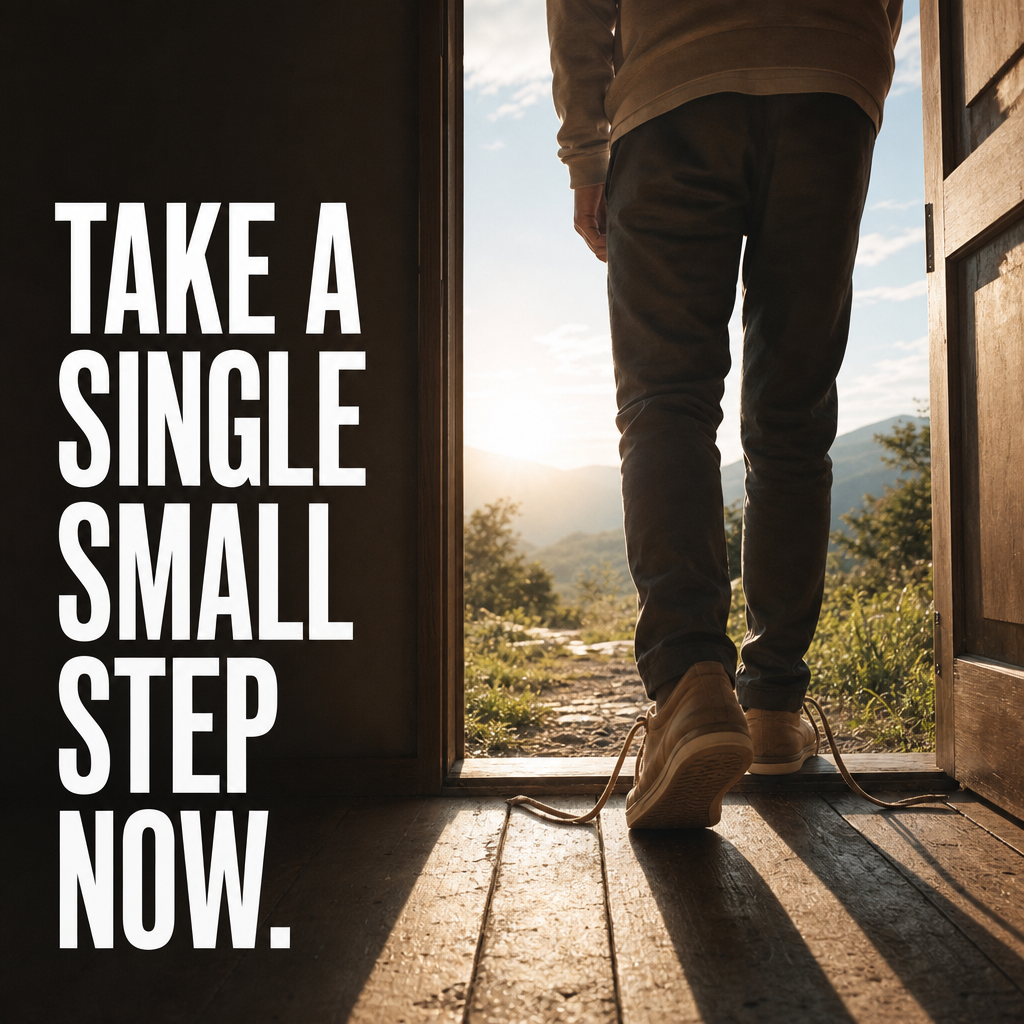
TAKE A SINGLE SMALL STEP NOW.
Do one tiny action toward your goal—right now, before you feel fully prepared.

Start Before You Feel Ready: Progress Loves Beginners
Have you ever watched someone leap into something new and wondered, "How did they know it was the right time?" Maybe it’s a colleague who volunteers to lead a challenging project, or a friend who finally starts the side hustle they’ve been mentioning for ages. Meanwhile, you might still be collecting articles, second-guessing your outline, or waiting for some magical sense of readiness to appear. Here’s the honest truth: Most people don’t feel ready when they begin. Readiness isn’t a destination, it’s a process that often starts the very moment you take a small, imperfect action. For many of us, waiting to feel prepared becomes its own comfortable holding pattern—an attempt to dodge discomfort, but also a way to postpone learning and growth. What research and experience both show: Competence, clarity, and momentum appear as you move, not before. So today, let’s trade in the promise of “someday, when I’m ready” for a single, down-to-earth step now.
Why Readiness Comes After You Begin
It’s easy to picture readiness like a switch: one day, after enough planning or credentials, the light turns green. But behavioral science paints a more surprising picture. Studies of skill development and productivity show that accomplishment almost always follows action—not the other way around ([brief.founderwise.io](https://brief.founderwise.io/start-before-you-re-ready/?utm_source=openai)).
Each first step, taken before the ideal circumstance, generates real-life feedback: What works? What confuses you? What still needs researching? Instead of guessing at obstacles from a distance, you suddenly have firsthand answers. That’s why experts—from athletes to entrepreneurs—credit their growth to doing, not waiting. The skills and confidence you’re hoping for? They’re rewards, not admission tickets.
A Surprising Truth: Starting Shrinks Uncertainty
Here’s what surprises many: Uncertainty doesn’t always shrink through over-preparation. It shrinks fastest when you interact with the real thing—even messily. That first tiny action (writing a sentence, opening the editor, making a sketch, asking one question) produces material to work with. Now, progress has somewhere to anchor.
This initial feedback loop creates its own momentum. Every adjustment you make, every course correction, is information you simply can’t get while standing still. In fact, some research suggests that waiting for readiness can quietly freeze your progress, building up fears and overcomplicating next steps ([taskloco.com](https://www.taskloco.com/articles/start-before-you-are-ready.html?utm_source=openai)).
Hypothetical Example: Maya and the Unfinished Project
Imagine Maya, who’s wanted to write a children’s book for two years. Her notes, references, and character sketches fill a desktop folder labeled “Someday.” Each time she opens it, she feels overwhelmed—not ready to know exactly how the story should begin.
One Saturday, instead of waiting for flow or clarity, Maya opens a blank document and writes a single messy paragraph. It feels incomplete, and she notices plot holes. But now there’s a line of dialogue to improve, something to shape. Feedback from that small start shows what’s missing—and what’s possible. Maya doesn’t feel ready, but she’s no longer standing still. Tomorrow, she can return with sharper questions and a little more courage—instead of just another empty day.
Try This: Shrink Your First Step to the Smallest Size
Here’s a practical way to apply this idea today: Identify the smallest, simplest action you can take toward your goal—one that takes two minutes or less. Maybe it’s naming your project in a new doc, sending a text to schedule a coffee chat, or reading the first paragraph of a resource you’ve been avoiding. Don’t wait for a grand plan, a better outline, or a boost of confidence.
Just move by one small increment. It’s not about finishing or even understanding everything. The aim is to make readiness a result of doing, not a requirement for starting. Sometimes, the real clarity comes from seeing what happens next.