



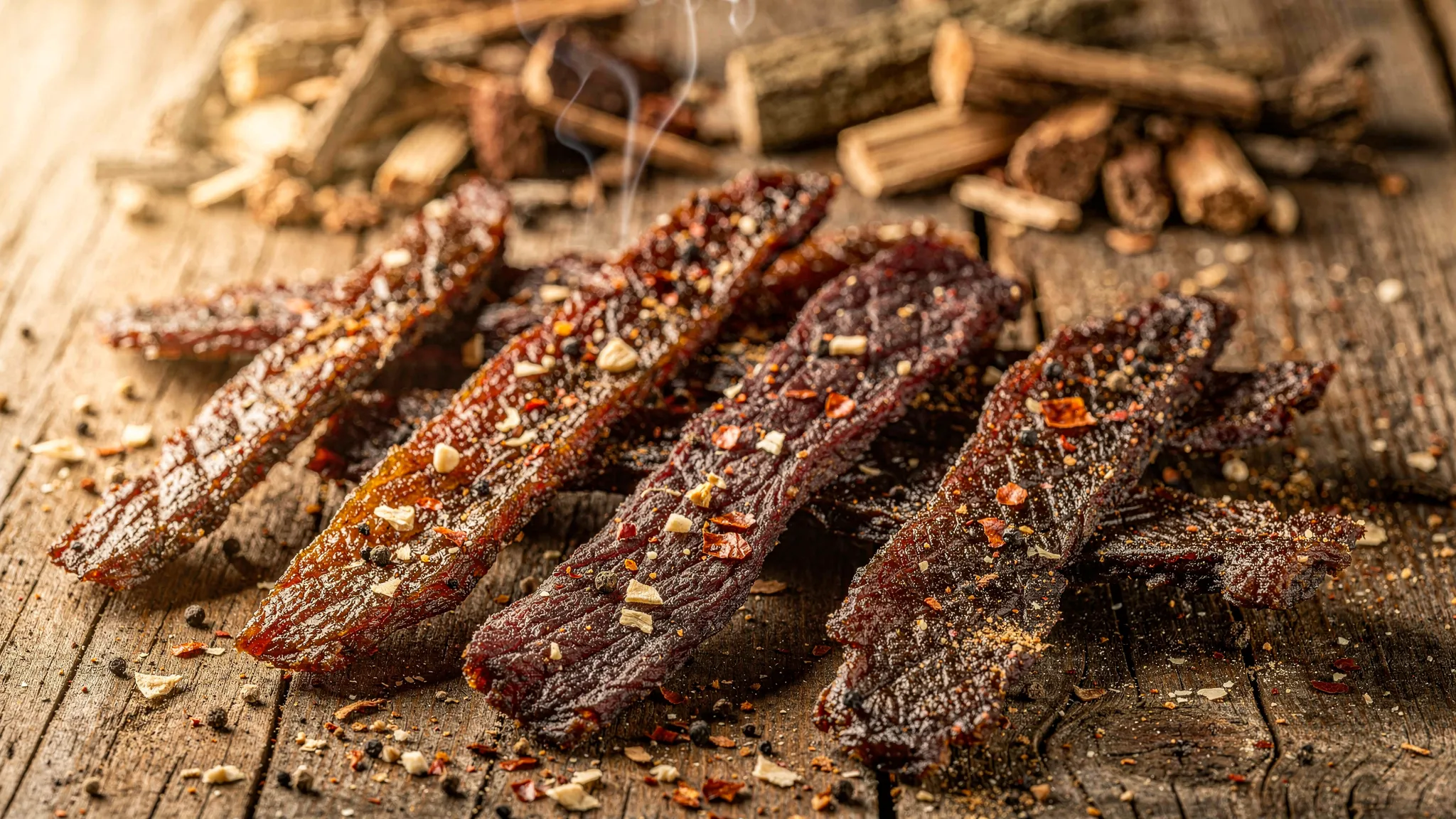
Smoked beef jerky is one of those snacks that can taste “bold and outdoorsy” in one bite, and strangely flat in the next. The difference is rarely the label on the front. It usually comes down to how the smoke flavor was built, what cut and slice were used, and how the jerky was dried and packaged.
This guide breaks down what smoked beef jerky should taste like, how it should feel when you chew it, and the easiest ways to spot quality when you’re buying online.
What “smoked beef jerky” really means (and why it matters)
At its simplest, smoked beef jerky is jerky that picks up smoky flavor notes during production. But there are two common paths to get there, and they can produce noticeably different results.
1) Smoked in a smokehouse with real wood smoke
This is the classic approach: wood smoke circulates around the meat as it dries (or during a smoking step before drying). Done well, it creates a layered smoke character that reads as savory, toasted, sometimes slightly sweet, and often peppery.
The smoke can also subtly change aroma and color, giving the jerky a deeper, barbecue-like profile.
2) Smoke flavor added (often via liquid smoke)
Some products get their smoky profile from smoke-derived flavoring. This can be done responsibly and can taste great, but it often comes across as more direct and “one-note” (think: strong campfire aroma up front, less evolution as you chew).
How to use this as a shopper: if you love a deep, wood-forward smoke that lingers, look for cues that the jerky was actually smoked. If you prefer a clean, consistent smoky hit (and often a softer bite), smoke flavoring can still be a valid choice.
The flavor profile: what good smoke should taste like
Smoke is not a single flavor. It’s a mix of aromas that can lean sweet, spicy, earthy, or even slightly bitter if overdone. The best smoked beef jerky usually hits three notes at once:
- Savory base (beefy, umami)
- Toasted smoke (wood, char, barbecue)
- A supporting finish (pepper, garlic, mild sweetness, or chile warmth)
If the smoke tastes acrid, ashy, or harshly bitter, that is often a sign of too much smoke intensity, poor smoke control, or a flavor profile that’s trying to cover up weak meat flavor.
Wood choices and what you’ll actually notice
Different woods tend to produce different smoke impressions. You do not need to be a pitmaster to benefit from this, it’s simply a shortcut to predicting taste.
| Wood (common in smoking) | Smoke impression | Best for people who like | Watch-out if you dislike |
|---|---|---|---|
| Hickory | Bold, classic “BBQ smoke,” savory | Traditional smokehouse flavor | Smoke that dominates everything |
| Mesquite | Intense, earthy, sometimes sharp | Big, assertive smoke | Harsh or bitter notes when heavy |
| Oak | Balanced, medium smoke | “Smoky but not crazy” | Less punch than hickory lovers want |
| Apple or cherry | Sweeter, lighter, more aromatic | Softer smoke with a gentle finish | Too mild for hardcore smoke seekers |
Tip: smoked jerky often pairs best with black pepper, garlic, and chile because those flavors reinforce smoke without turning it into “sweet BBQ candy.”

Texture: how smoking and drying shape the chew
A lot of shoppers assume “smoked” automatically means “tough.” Not true. Texture is mostly controlled by moisture level, slicing, and drying time, while smoke is more about flavor and aroma.
Here’s what actually drives the bite you feel.
Cut and fat level
Jerky made from leaner, whole-muscle cuts often has a cleaner chew and better shelf stability. A little fat can add flavor, but excess fat can shorten freshness and make texture feel greasy over time.
Slice direction (with the grain vs against the grain)
- Against the grain usually chews more easily.
- With the grain often creates a more old-school “rip and chew” experience.
If you love a workout-for-your-jaw jerky, grain-forward slicing can be a feature, not a flaw.
Moisture level (the biggest texture factor)
- More moisture tends to feel tender and flexible.
- Less moisture tends to feel drier, denser, and more “snap and tear.”
Smoke doesn’t guarantee either. You can have tender smoked jerky and very dry smoked jerky.
Surface seasoning vs. smoke integration
Great smoked beef jerky usually tastes like the smoke is in the meat, not sitting on top of it. If you bite in and get a big smoky burst that disappears instantly, that can indicate surface-forward flavoring.
What to look for when buying smoked beef jerky online
When you can’t sample first, you need signals. Use these as your quick quality filter.
1) Ingredient list: keep it readable
There’s no single perfect ingredient list, but smoked beef jerky that people re-order typically avoids extremes.
Look for:
- Beef first, followed by recognizable seasonings
- A smoke cue such as “smoked,” “wood smoked,” or an ingredient like “natural smoke flavor” (so you know what you’re getting)
- A sweetness level that matches your preferences (some smoked profiles are better savory)
If you are trying to avoid sugar, look specifically for sugar-free or no added sugar options, and verify in the Nutrition Facts panel and ingredients.
2) A clear description of texture
Good brands tell you what chew to expect (tender, thick cut, old-school, rip-and-chew). If the product page is vague, you are guessing.
3) Packaging and freshness cues
Smoked notes are volatile, meaning they fade with time and exposure to oxygen. Better packaging helps preserve that fresh smoke aroma.
When shopping, look for clear statements about:
- Sealed packaging (often vacuum-sealed)
- Storage guidance after opening
- Shipping practices that protect product integrity
4) Food-safety signals you can trust
Jerky is a shelf-stable snack, but it still needs to be produced safely. If you want the official baseline guidance on jerky handling and safe preparation, USDA’s Food Safety and Inspection Service has consumer resources like Jerky and Food Safety.
For shoppers, the practical takeaway is simple: buy from producers that are transparent about ingredients, handling, and storage instructions.
5) Make sure “smoked” matches your dietary needs
“Smoked” is a flavor and process, not a diet category. If you are shopping with constraints, confirm them separately:
- Gluten-free: verify the product is labeled gluten-free if that’s your standard.
- Sugar-free: check both the claim and the Nutrition Facts.
- Sodium awareness: smoked products can taste saltier because smoke intensifies savoriness.
A quick buying scorecard (simple but effective)
| What to check | Why it matters for smoked beef jerky | What it often looks like online |
|---|---|---|
| Smoke method cue | Predicts depth and “real smoke” character | “Wood smoked,” “smokehouse,” or clear smoke-flavor wording |
| Texture description | Prevents disappointment | “Tender,” “old-school,” “thick cut,” “rip and chew” |
| Ingredient transparency | Helps you avoid sugar or fillers | Short list you can read quickly |
| Packaging notes | Protects smoke aroma and chew | Sealed packaging, storage guidance |
| Brand trust signals | Reduces safety and quality risk | Clear policies, FAQs, contact info, consistent labeling |
Matching smoked beef jerky to your goal (gym bag, road trip, gifting, or bulk)
Smoked beef jerky is a “flavor-first” snack, but it still needs to fit the situation.
For performance snacking
If you’re using jerky as a protein-forward option, smoked styles that lean savory (pepper, garlic, classic smoke) often feel less like a dessert snack and more like real food.
Also consider whether you prefer tender (easy to eat fast) or old-school (slower chew, more satisfying).
For travel and long days
Smoked profiles are great when you want a strong flavor that does not get boring. For road trips, many people like a mix of:
- One classic smoky option
- One spicy or peppery option
- One sugar-free or lower-sweetness option
For gifting
Smoked jerky is a safe crowd-pleaser because it reads “BBQ” even to people who are not jerky enthusiasts. If you don’t know the recipient’s sweet preference, a smoky-savory profile is usually the lowest-risk bet.
For buying in bulk (without regret)
Bulk buying works best when you reduce uncertainty.
A practical approach is to sample a few smoke levels and textures first, then stock up on the winners. If you like to customize, BULK Beef Jerky offers options like building your own snack box and bundle deals (including advertised bundle savings and free shipping thresholds on their site), which can make it easier to mix smoky classics with sugar-free or gluten-free picks.
You can explore bulk formats and variety options directly at Bulk Beef Jerky.
Keeping smoke flavor fresh after you open the bag
Once opened, your biggest enemies are air and time.
- Reseal tightly after each grab.
- If you bought a larger bag, portion a few days’ worth into a smaller container so you are not repeatedly exposing the whole supply to air.
- Follow the brand’s storage instructions, especially for more tender, higher-moisture jerky.
If you ever notice an off smell, visible mold, or an unusual slimy surface, do not “power through.” When in doubt, throw it out. (USDA FSIS also outlines consumer safety guidance for jerky handling on its site, including what to look for and safe storage practices.)

Frequently Asked Questions
Is smoked beef jerky the same as regular beef jerky? Smoked beef jerky is beef jerky with a smoke character added either through smokehouse smoking or smoke-derived flavor. Regular jerky may be unsmoked, lightly smoked, or focused on other flavors (teriyaki, pepper, sweet heat).
How can I tell if smoked beef jerky is actually wood-smoked? Check the product description and ingredient list for cues like “wood smoked,” “smokehouse,” or similar wording. If the ingredients mention “natural smoke flavor” or “smoke flavor,” it may be smoke-derived flavoring rather than smokehouse smoking.
Why does some smoked jerky taste bitter? Bitter or ashy smoke can come from over-smoking, overly intense smoke profiles (mesquite-heavy styles can read sharp), or a flavor balance that does not include enough salt, spice, or sweetness to round it out.
Does smoked beef jerky have to be tough? No. Texture is mostly driven by moisture level, cut, slice direction, and drying time. You can find smoked jerky in tender, medium-chew, and old-school rip-and-chew styles.
What should I look for if I want smoked jerky with no sugar? Look for sugar-free or no-added-sugar smoked options, then confirm by reading the Nutrition Facts and ingredients. Some smoky flavors use sugar for balance, so checking the label matters.
Find your ideal smoked jerky (without guessing)
If you want to dial in both smoke flavor and chew, start with variety. Shop smoked styles alongside sugar-free and gluten-free options, or build a custom box so you can test what you actually crave.
Browse smoked beef jerky and bulk snack options at Bulk Beef Jerky.