



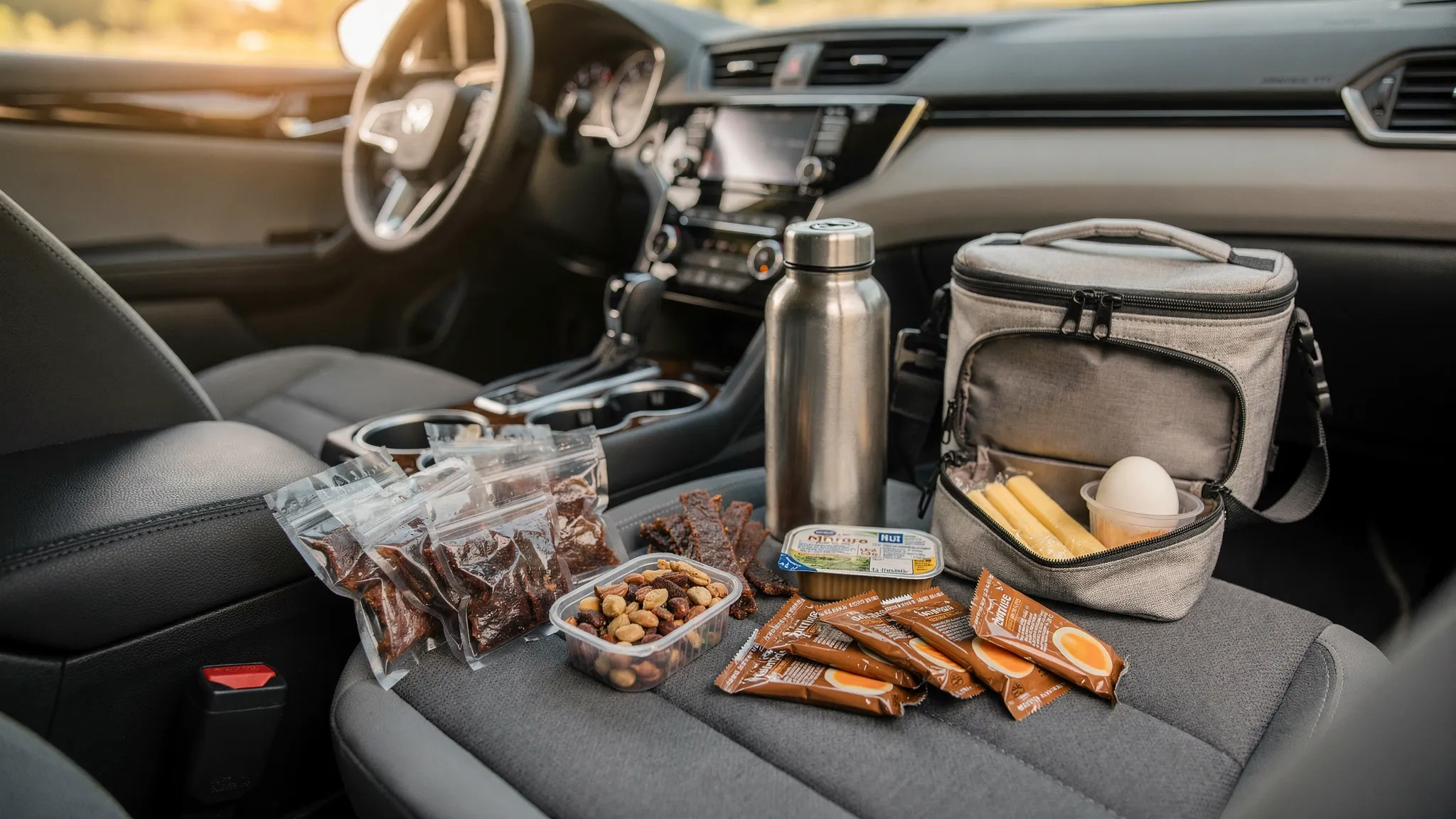
Road trips have a special way of turning “we’ll grab something later” into “why did we eat a gas-station donut at 10 a.m.?” If you’re searching for the best food for a road trip, the answer is usually the same: pick snacks that are high in protein, low in mess, and stable without a fridge.
Protein-forward snacks help keep hunger predictable and energy steadier, which matters when your next stop might be 90 miles away. Harvard’s nutrition guidance also notes protein’s role in fullness compared with other macronutrients, making it a practical lever for travel-day eating patterns.
Below is a road-tested way to choose high-protein snacks that travel well, plus a simple system for packing enough variety without overpacking.
What makes a snack “road-trip proof”?
A good road trip snack is not just tasty. It has to behave well in a hot car, a cramped console, and one-handed eating.
The 5 traits that matter most
Shelf stability (or cooler-friendly). If it’s perishable, it needs a cooler plan. The USDA’s food-safety guidance emphasizes keeping perishable foods out of the “danger zone” (roughly 40°F to 140°F) and following the 2-hour rule (1 hour if it’s hot outside).
High protein per ounce. Space is limited. You want snacks that deliver meaningful protein without bulky packaging.
Low mess. Powdery crumbs, sticky glazes, and chocolate melt are morale killers.
Resealable and portionable. The best snacks let you eat a little now and keep the rest fresh.
Works with your diet. Gluten-free, sugar-free, and lower-carb choices are easier to stick to on the road when your default options are limited.

Best high-protein snacks that travel well (with realistic trade-offs)
No single snack checks every box. The goal is to build a mix that covers different hunger moments: quick bites, longer-lasting chew, and something crunchy.
Beef jerky (the road trip classic for a reason)
Jerky is one of the easiest answers to “high-protein that doesn’t need a fridge.” It’s compact, satisfying, and easy to stash in the glovebox.
What to look for when buying jerky for travel:
- Protein per ounce, not per bag. Serving sizes vary. If you want a quick reference point, many traditional jerkies land around 9 to 13 grams of protein per 1 ounce, but always verify on the label. (If you want a simple label-reading method, see Beef Jerky Protein: How Much per Serving?.)
- Watch added sugar if you snack frequently. Sweet styles can be great, but if you’re grazing all day, sugar adds up fast. For low-sugar strategies, Sugar Free Beef Jerky: Best Options and Tips is a helpful reference.
- Think about texture. Tender styles are easy to eat quickly, while tougher “rip and chew” styles slow you down (often a good thing on a long drive). This guide on jerky chew and texture can help you pick.
Practical road tip: portion a “driver bag” (easy-open, no crumbs) and keep the bigger backstock sealed until a stop.
Meat sticks (fast, clean protein)
If jerky is “slow fuel,” meat sticks are the quick-hit option. They’re usually:
- Easy to open
- Easy to eat one-handed
- Less likely to leave little shards in your seat than some jerkies
What to check:
- Ingredient list and added sugar
- Sodium (especially if you tend to retain water during travel)
If you want a label-focused way to compare options, see Healthy Beef Sticks: What to Check Before Buying.
Nuts and seeds (protein plus crunch, with long shelf life)
Nuts and seeds are travel MVPs: they tolerate temperature swings, they don’t leak, and they add texture variety so you don’t burn out on meat snacks.
Typical examples:
- Almonds
- Peanuts
- Pistachios
- Pumpkin seeds
- Mixed nuts
They’re also easy to portion into small bags so you do not mindlessly snack through the whole container.
Two cautions:
- Calories add up quickly because nuts are energy-dense.
- Flavored varieties can be high in sodium.
Nut butter packets (high satiety, zero crumbs)
Single-serve nut butter packs are one of the cleanest “protein + fat” road trip snacks available.
They work best when paired with something else:
- A banana or apple
- Crackers or a tortilla
- Beef jerky for a higher-protein combo
Tuna or chicken pouches (high protein, minimal space)
Shelf-stable protein pouches are hard to beat for protein-per-cubic-inch. They’re great for:
- Long drives where you want something closer to a mini-meal
- “I’m hungry but I’m not craving sugar” moments
Bring a fork or spork, and pack a small trash bag because the smell can linger in a car.
Protein bars and ready-to-drink shakes (convenience wins, read the label)
Bars and shakes can be useful when you need predictable nutrition and zero prep. The downside is that many are essentially candy bars with a protein claim.
Quick label cues:
- Protein per serving: aim for a meaningful amount relative to calories
- Added sugar: lower is usually easier for all-day snacking
- Fiber and sugar alcohols: can upset some stomachs during long seated drives
Cooler-required proteins (worth it for some trips)
If you are traveling with a small cooler, you can upgrade your snack quality quickly:
- Greek yogurt
- Cottage cheese
- Cheese sticks
- Hard-boiled eggs
- Turkey or roast beef roll-ups
Food-safety reminder: use enough ice packs and keep the cooler closed. USDA guidance on keeping cold foods cold is worth following closely when the car is warm and stops are long.
A simple road trip snack system that prevents “random eating”
Instead of tossing 12 snacks into a bag and hoping for the best, build a small system. Here’s a simple structure that works for most people:
Build around three snack roles
Chewy anchor (protein-dense). Jerky is ideal because it slows you down.
Fast bite (quick protein). Meat sticks, a bar, or a protein shake.
Crunch or “fresh break.” Nuts, seeds, or a piece of fruit.
A few combo ideas that travel well:
- Jerky + roasted nuts + sparkling water
- Meat stick + apple + nut butter pack
- Tuna pouch + crackers + pickles (cooler optional depending on the pickles)
- Sugar-free jerky + seed mix (simple, low-fuss)
If you’re ordering protein snacks online for a trip, it can help to choose a mix of styles and dietary fits so everyone in the car has a “default yes” option. This label-first guide on highest protein jerky is a good framework for picking protein-forward options without surprises.

The road trip snack table: what to pack and what to watch
Use this as a quick planning tool, especially if you are buying for multiple passengers.
| Snack type | Why it works for road trips | What to watch | Best use case |
|---|---|---|---|
| Beef jerky | Shelf-stable, compact, satisfying chew | Sodium, added sugar in some flavors | Long stretches between stops |
| Meat sticks | Clean, fast, easy one-handed | Sodium, ingredient list, added sugar | Driver-friendly quick bite |
| Nuts and seeds | Shelf-stable, crunchy, easy to portion | Calorie-dense, flavored versions can be salty | “Snacky” hunger, variety |
| Nut butter packets | No crumbs, high satiety | Easy to overdo if you pack many | Pair with fruit, crackers, or jerky |
| Tuna/chicken pouches | Very high protein for the space | Smell, trash management | Mini-meal replacement |
| Protein bars/shakes | Extremely convenient | Added sugar, sugar alcohol GI issues | Backup when stops are unpredictable |
| Cooler proteins (eggs, yogurt, cheese) | More “real food” feel | Needs strict cold control | Family trips, longer travel days |
Food safety on the road (especially in warm weather)
A road trip is not the day to gamble with food poisoning.
Practical rules that align with USDA food-safety guidance:
- If it needs refrigeration, treat it like it needs refrigeration. Use a real cooler and ice packs.
- Do not leave perishable foods in a parked car. Car interiors heat fast.
- Pack shelf-stable proteins for the console, cooler foods for planned stops. It reduces the temptation to “just keep it out for a bit.”
Jerky and many meat snacks are designed for travel, but always follow the storage instructions on the package once opened.
Packing checklist (small items that make a big difference)
Keep this minimal. The goal is less chaos, not a kitchen on wheels.
- Resealable bags or small containers for portions
- Wet wipes or a damp cloth (especially for seasoned snacks)
- A dedicated trash bag (do not rely on the door pocket)
- A few napkins
- Water bottle plus an electrolyte option if you run salty snacks
- Cooler bag and ice packs if you’re bringing perishable food
Buying road trip snacks in bulk without getting sick of them
Buying in bulk is smart for road trips because it lowers your cost per ounce and keeps you stocked for future drives. The only problem is “flavor fatigue,” when you buy one giant bag and regret it on day two.
Three strategies that help:
Rotate flavors and textures on purpose
If you like jerky, mix:
- One classic, crowd-pleasing flavor
- One peppery or smoky option
- One lower-sugar option if you snack frequently
This approach also works across snack types: jerky for chew, sticks for quick bites, nuts for crunch.
Keep most of your stash sealed
Open one bag at a time and treat the rest as backstock. It keeps food fresher and helps with portion control.
Use bundles or a build-your-own box to reduce risk
If you are stocking up for a trip (or for a family car), variety packs and customizable bundles make it easier to please different eaters without buying huge quantities of a single flavor.
Bulk Beef Jerky offers build-your-own snack boxes, bundle deals (often promoted as up to 20% off), and free shipping over $100. If you want a value-first way to plan a trip order, these two guides are useful:
Putting it all together: the best food for a road trip is the food you can actually stick to
The best road trip snack plan is not about perfect macros. It’s about eliminating the predictable failures: sugar crashes, messy hands, and “there was nothing filling, so we stopped again.”
Build your travel snacks around portable protein (jerky, sticks, pouches), add crunch and variety (nuts, seeds), and decide upfront whether you’re bringing a cooler.
If you want a simple way to stock up before your next drive, start with a mixed order from Bulk Beef Jerky and aim for variety across flavor, texture, and dietary needs (including sugar-free and gluten-free options). It’s the easiest way to keep the car stocked with high-protein snacks that actually travel well.