



JERKY RECIPES · FROM THE VIDEO TO YOUR KITCHEN
Korean Sweet-Spicy Cayenne Beef Jerky
Six photo steps. A credited source video. A recipe guide to save.

Pepper Geek’s small-batch recipe uses just a teaspoon of gochujang, with cayenne providing much of the heat. Brown sugar and sesame oil make a sweet-savory base. It differs from richer gochujang marinades that use larger amounts of chile paste, fish sauce or pear.
Watch the original video
Video by Pepper Geek · Watch on YouTube
Ingredients
Starting batch: 1 lb raw lean beef; finished yield varies.
- 1 lb lean flank steak or eye of round, trimmed
- 2 tbsp low-sodium soy sauce
- 2 tbsp packed dark brown sugar
- 1 tsp sesame oil
- 1 tsp gochujang
- ½ tsp garlic powder
- ½ tsp onion powder
- ½ tsp cayenne pepper
- Water as needed to cover the beef for the heating step
Equipment: sharp knife, cutting board, kitchen scale, covered nonreactive container, saucepan, thin-tip food thermometer, clean tongs, wire racks, and an adjustable-temperature dehydrator.
Allergens: Soy, sesame and commonly wheat. Check gochujang and soy sauce labels.
How to make this jerky
Step 1: Trim and chill the beef
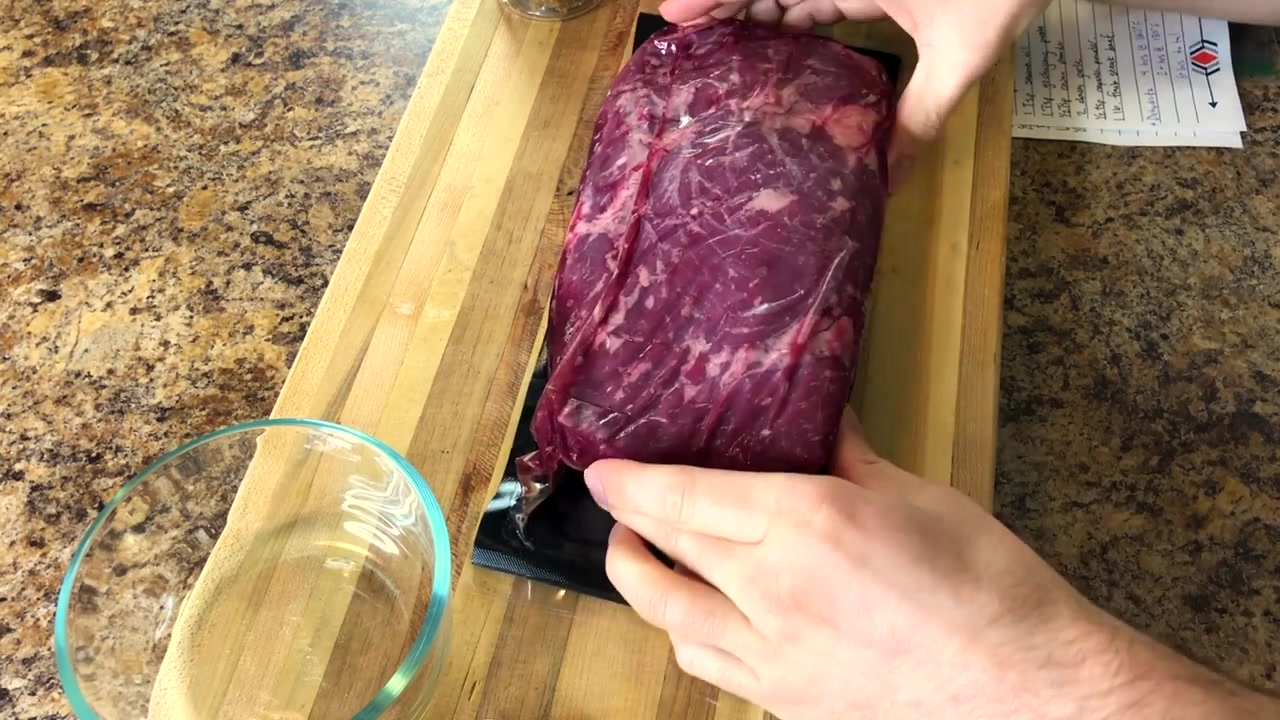
Trim visible fat and silver skin from the cold beef. Firm it briefly in the freezer if this makes slicing easier; keep the meat cold as you work.
Step 2: Slice evenly
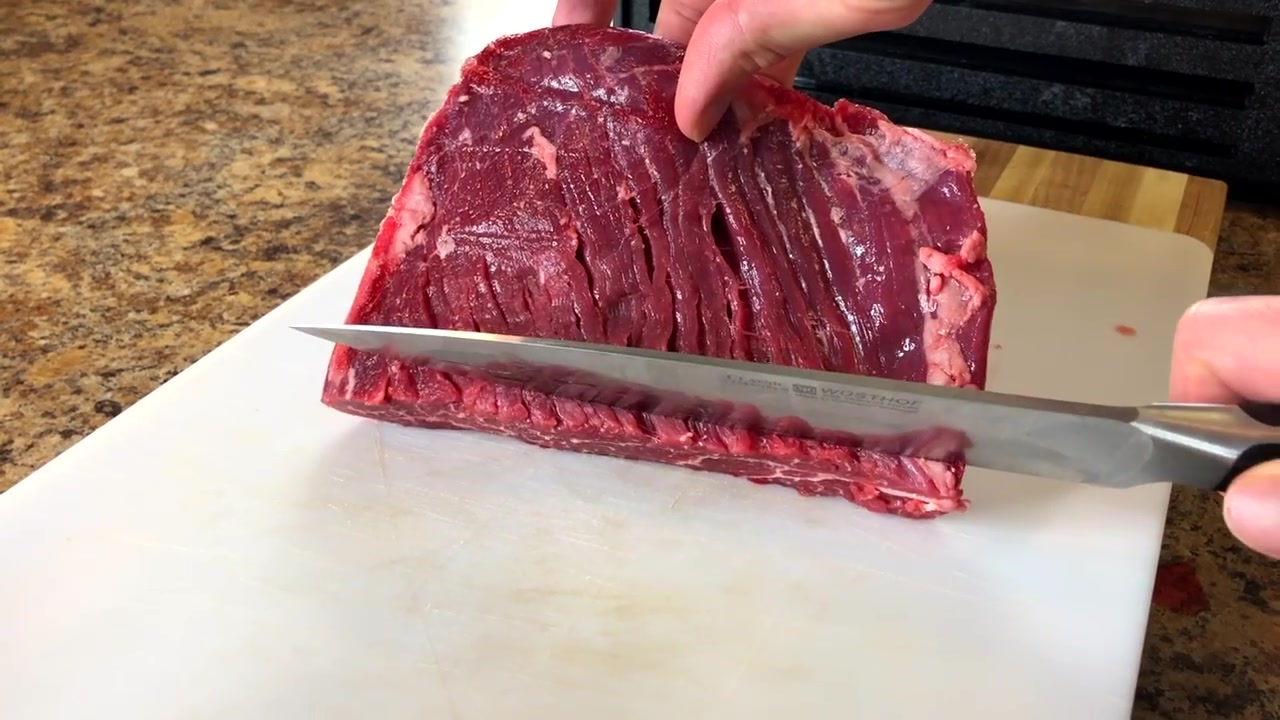
Slice the trimmed beef into even ⅛–¼ inch strips. Cut across the grain for a more tender bite; keep the thickness consistent so the pieces dry together.
Step 3: Mix the marinade
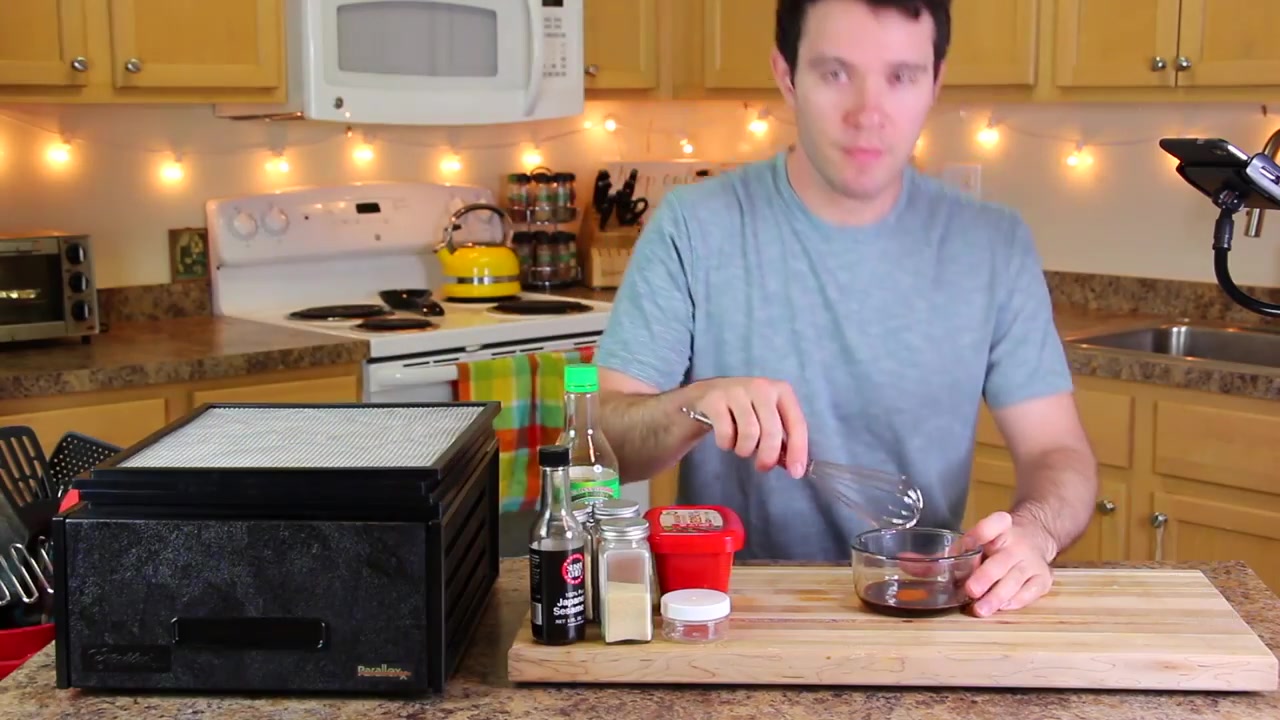
Combine the measured marinade ingredients in a nonreactive bowl. Stir until sugar or honey disperses and the seasonings are distributed. Reserve any finishing seeds or crust seasoning for the racks.
Step 4: Coat and refrigerate
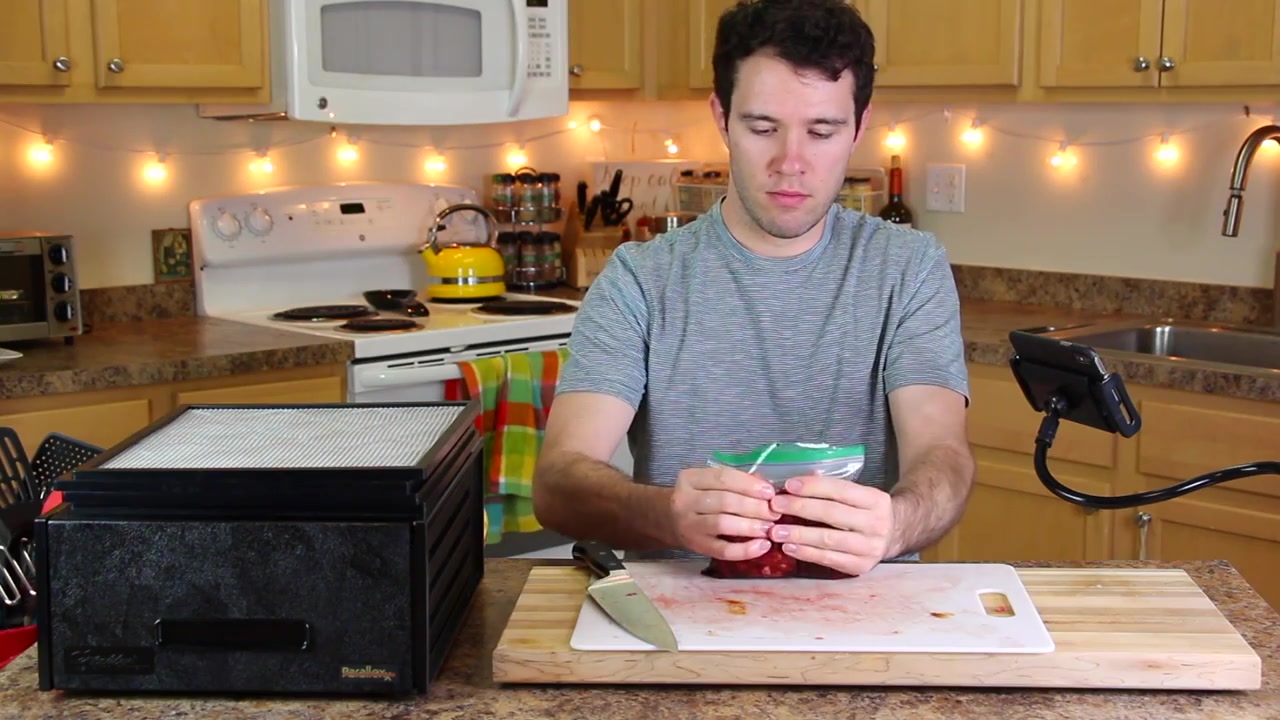
Separate any folded strips, toss thoroughly in the marinade, then cover and refrigerate 8–10 hours at 40°F or below. Turn the beef occasionally to redistribute the marinade. Do not leave raw marinated beef on the counter.
Step 5: Heat to 160°F, then dry
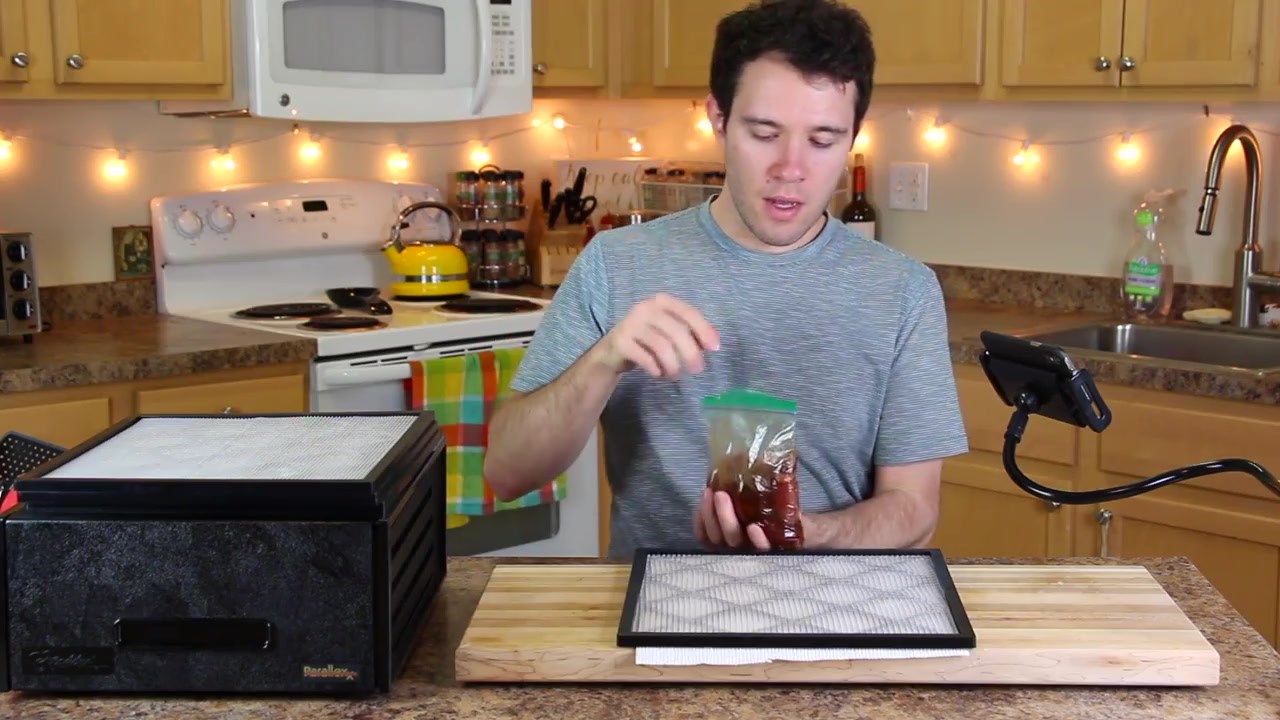
Before drying, put the marinated strips and marinade in a saucepan and add enough water to cover. Bring to a boil and simmer until the thickest strips reach 160°F internally, verified with a thin-tip food thermometer. Work in batches if needed. Remove with clean tongs and discard all used liquid. Arrange the heated strips in one layer on clean dehydrator racks, leaving space for air circulation. Dry at 145–155°F until centers are dry; thickness and equipment determine the time. A dryer air setting does not verify internal meat temperature.
Step 6: Check, cool and store
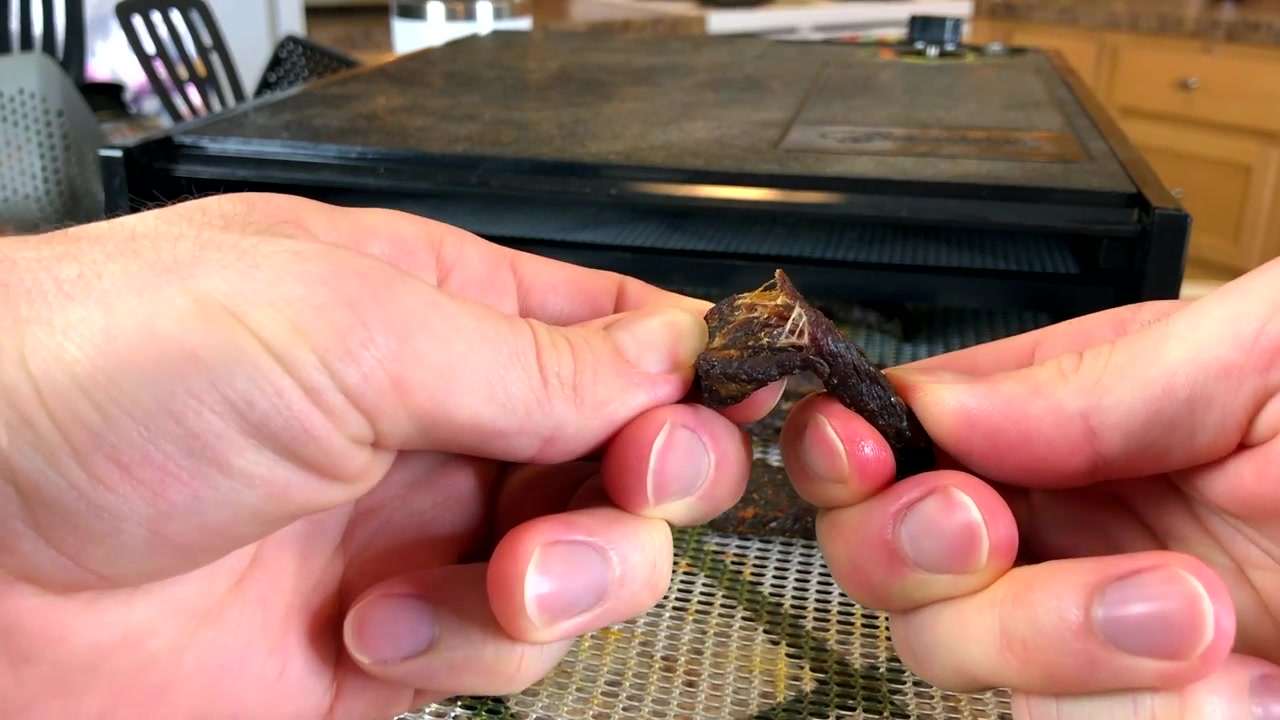
Cool a test strip before assessing texture. It should bend with visible cracking and have no wet pockets in its center; return thicker or damp pieces to the dryer. Cool the whole batch completely, then refrigerate in clean closed containers. Freeze portions you will not eat promptly. A bend test checks texture, not pathogen destruction.
Why this flavor works
Cayenne gives direct heat while sesame oil adds aroma in a small amount. Brown sugar rounds the sharp edges and the gochujang adds fermented depth.
Serving and storage
Serve a small portion straight from the refrigerator, or cut into bite-size pieces for a snack plate. Keep the remaining batch cold.
Keep the finished jerky refrigerated. Pack only fully cooled strips, keep hands and containers clean, and freeze portions you will not eat promptly. Moisture, thickness, and handling affect keeping quality; this home method does not establish commercial shelf stability.
A ready-to-eat option between batches
For a convenient jerky snack when you are not making a batch, explore BULK Texas Style Original Beef Jerky. Its seasoning and production process differ from this homemade adaptation.
Browse every published BULK jerky recipe.
Sources and further reading
- Korean Sweet & Spicy Beef Jerky Recipe for the Dehydrator - PepperGeek — Pepper Geek
- USDA: how to make meat or poultry jerky at home
- National Center for Home Food Preservation: jerky
Original BULK adaptation after reviewing the source video evidence and ingredient discussion. Source footage and creator credit belong to Pepper Geek. Photographs are timestamped source-video stills. Use the full written method for all ingredient and preparation details.
Save the complete recipe guide
Keep the ingredient list and all six steps together. Save the image for your next batch.
Download the recipe infographic