Honey-Soy Garlic Jerky: Sweet, Bold, and Easy at Home
Sep 28, 2026
BULK MOTIVATION
JERKY RECIPES
Honey-Soy Garlic Jerky: Sweet, Bold, and Easy at Home
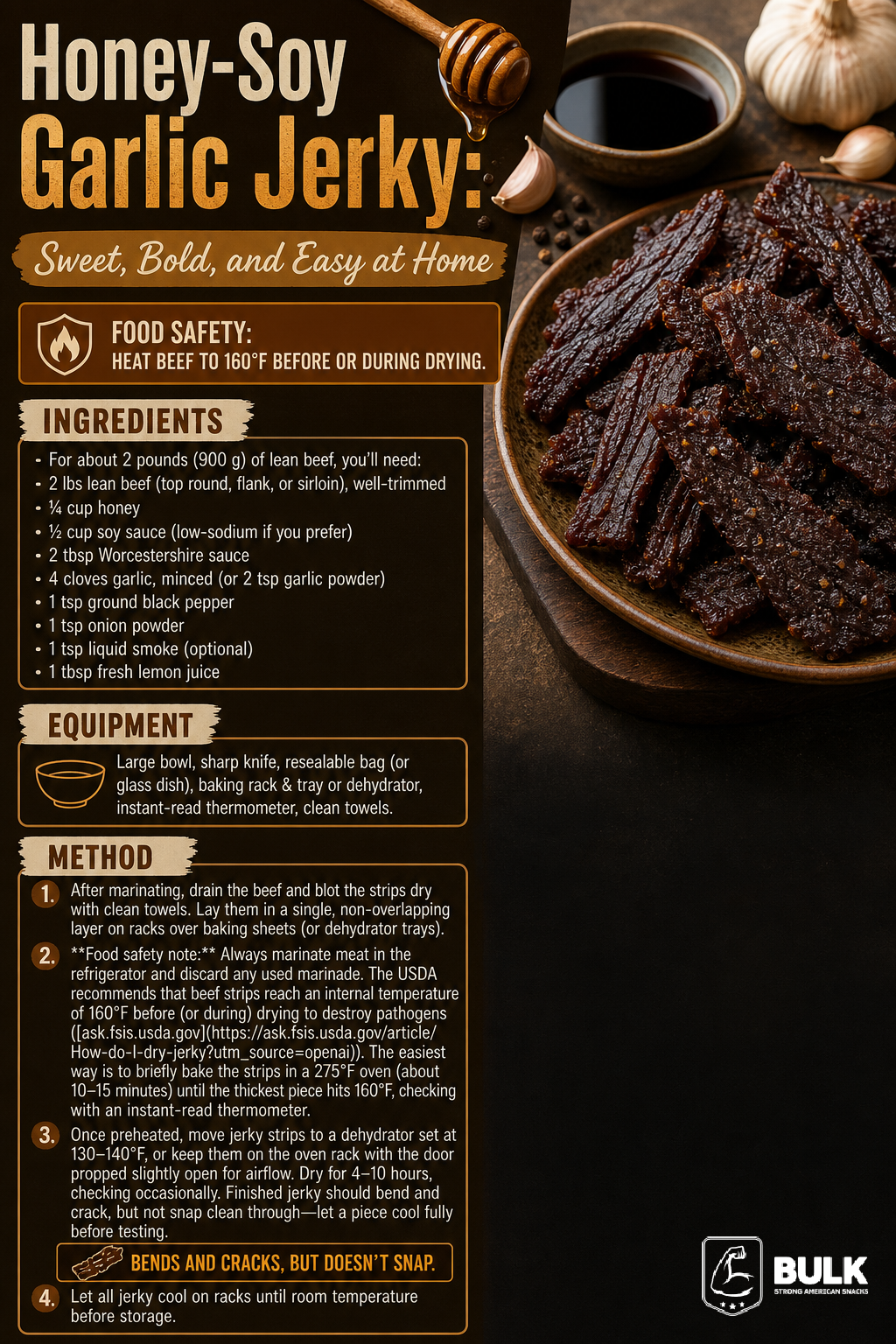
Save this reminder for a day you need it. Image created with AI.Recipe infographic: save or share this visual guide.
Honey-Soy Garlic Jerky: Sweet, Bold, and Easy at Home
Some kitchen wins feel like magic: the moment you open a bag of homemade beef jerky and the subtle sweetness, salty depth, and garlicky kick remind you why you skipped the store aisle. If you grew up thinking jerky had to be either plain salty or sugar-glazed, here’s a delicious third way: honey-soy-garlic jerky, where every strip has balanced, craveable flavor. The surprise? The best flavor starts even before your beef hits the bag—it starts when you take a quick minute to really whisk the honey into the soy sauce. This simple move ensures every bite is as flavorful as the last, and the recipe stays within reach for first-timers. Let’s walk through each part of the process—from marinating tips to safe, reliable drying—so you can craft jerky that tastes like your favorite snack, but even better.
Ingredients
For about 2 pounds (900 g) of lean beef, you’ll need:
2 lbs lean beef (top round, flank, or sirloin), well-trimmed
¼ cup honey
½ cup soy sauce (low-sodium if you prefer)
2 tbsp Worcestershire sauce
4 cloves garlic, minced (or 2 tsp garlic powder)
1 tsp ground black pepper
1 tsp onion powder
1 tsp liquid smoke (optional)
1 tbsp fresh lemon juice
Equipment: Large bowl, sharp knife, resealable bag (or glass dish), baking rack & tray or dehydrator, instant-read thermometer, clean towels.
Marinade: Bring It All Together
It’s tempting to toss all your liquids in a bag and walk away, but here’s where the big flavor happens. In a large mixing bowl, whisk the honey into the soy sauce until it’s fully dissolved. This helps the honey cling to the beef and avoids sticky patches or uneven flavor. Next, whisk in the Worcestershire, minced garlic, pepper, onion powder, lemon juice, and liquid smoke if using.
Slice your beef while partly frozen—it helps you get clean, even strips about 1/8 to 1/4 inch thick. Stir the strips into the marinade, making sure every piece is glossy and coated. Press out the air and seal your bag or dish, then marinate overnight in the refrigerator (12–16 hours is perfect).
Method: Slice, Marinate, Precook, and Dry
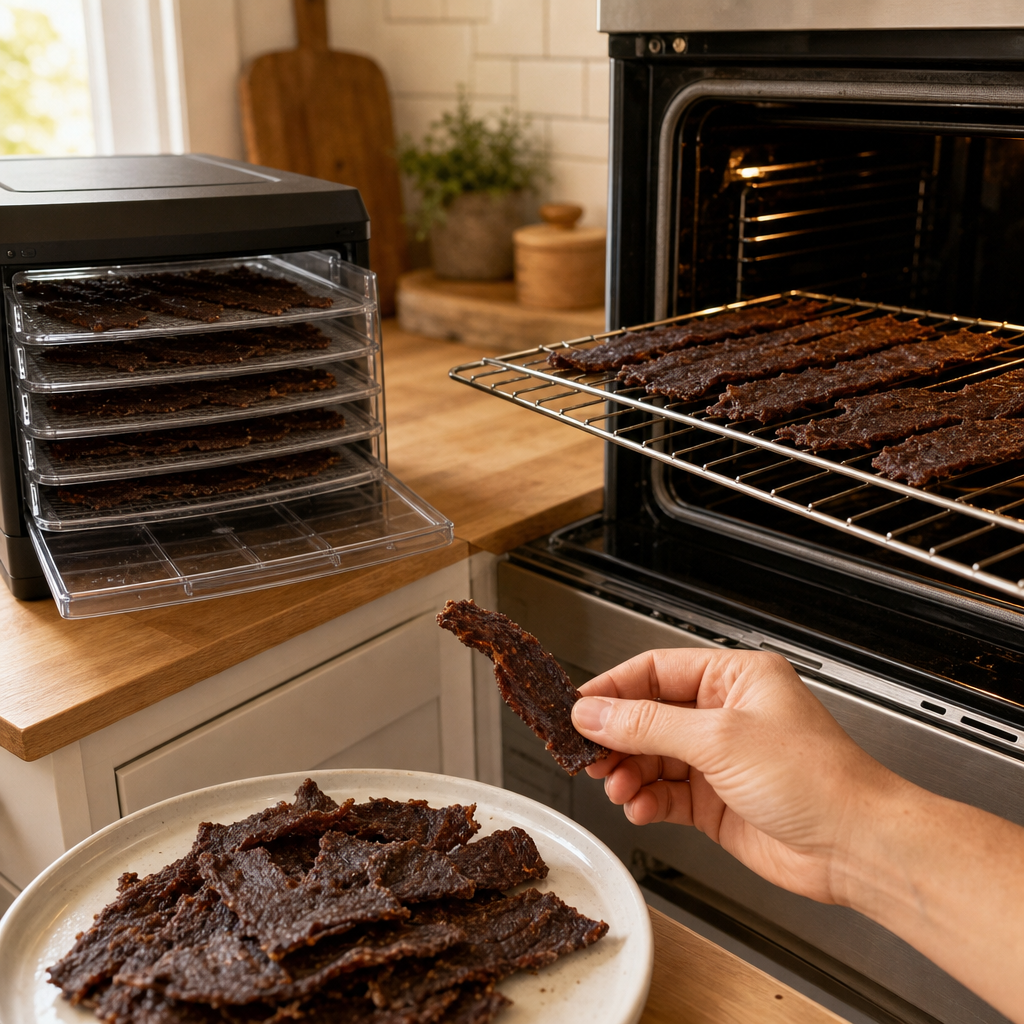
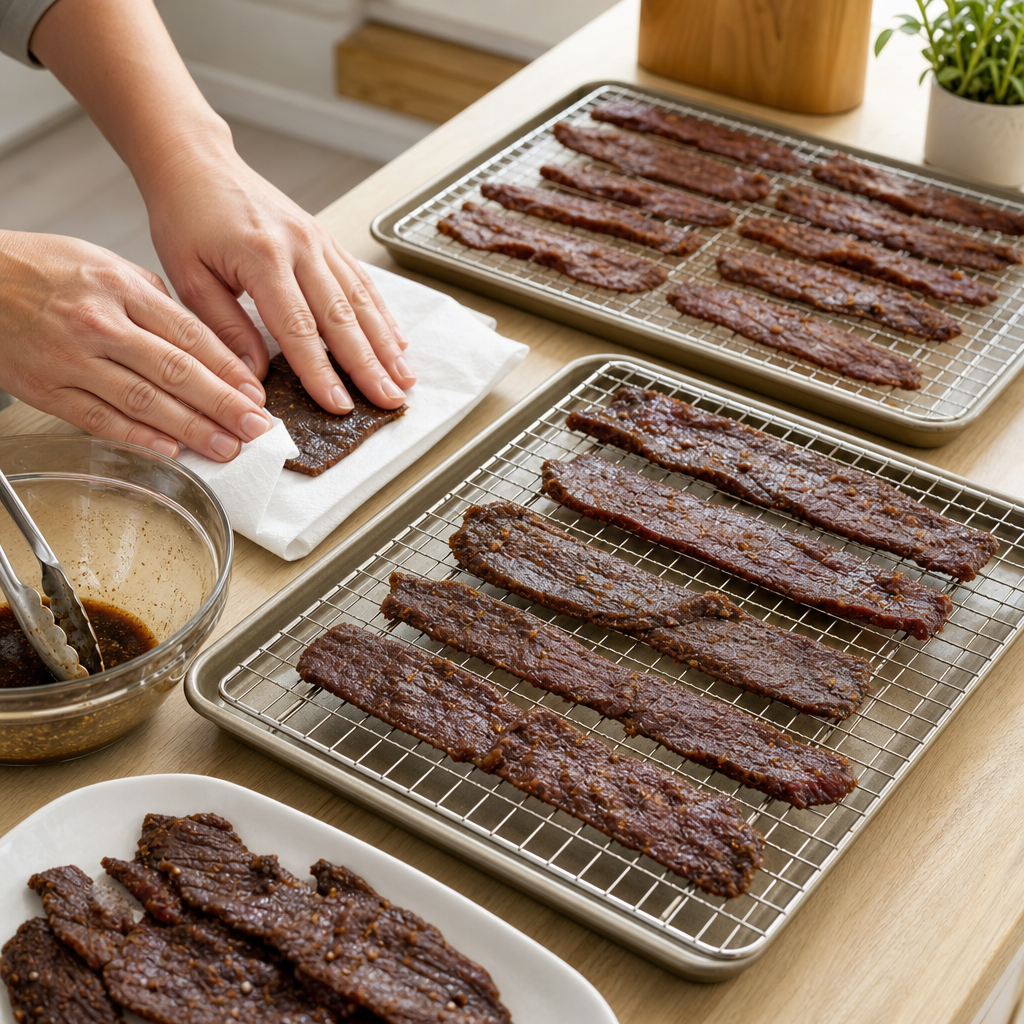
Step 1After marinating, drain the beef and blot the strips dry with clean towels. Lay them in a single, non-overlapping layer on racks over baking sheets (or dehydrator trays).
Step 2**Food safety note:** Always marinate meat in the refrigerator and discard any used marinade. The USDA recommends that beef strips reach an internal temperature of 160°F before (or during) drying to destroy pathogens ([ask.fsis.usda.gov](https://ask.fsis.usda.gov/article/How-do-I-dry-jerky?utm_source=openai)). The easiest way is to briefly bake the strips in a 275°F oven (about 10–15 minutes) until the thickest piece hits 160°F, checking with an instant-read thermometer.
Step 3Once preheated, move jerky strips to a dehydrator set at 130–140°F, or keep them on the oven rack with the door propped slightly open for airflow. Dry for 4–10 hours, checking occasionally. Finished jerky should bend and crack, but not snap clean through—let a piece cool fully before testing.
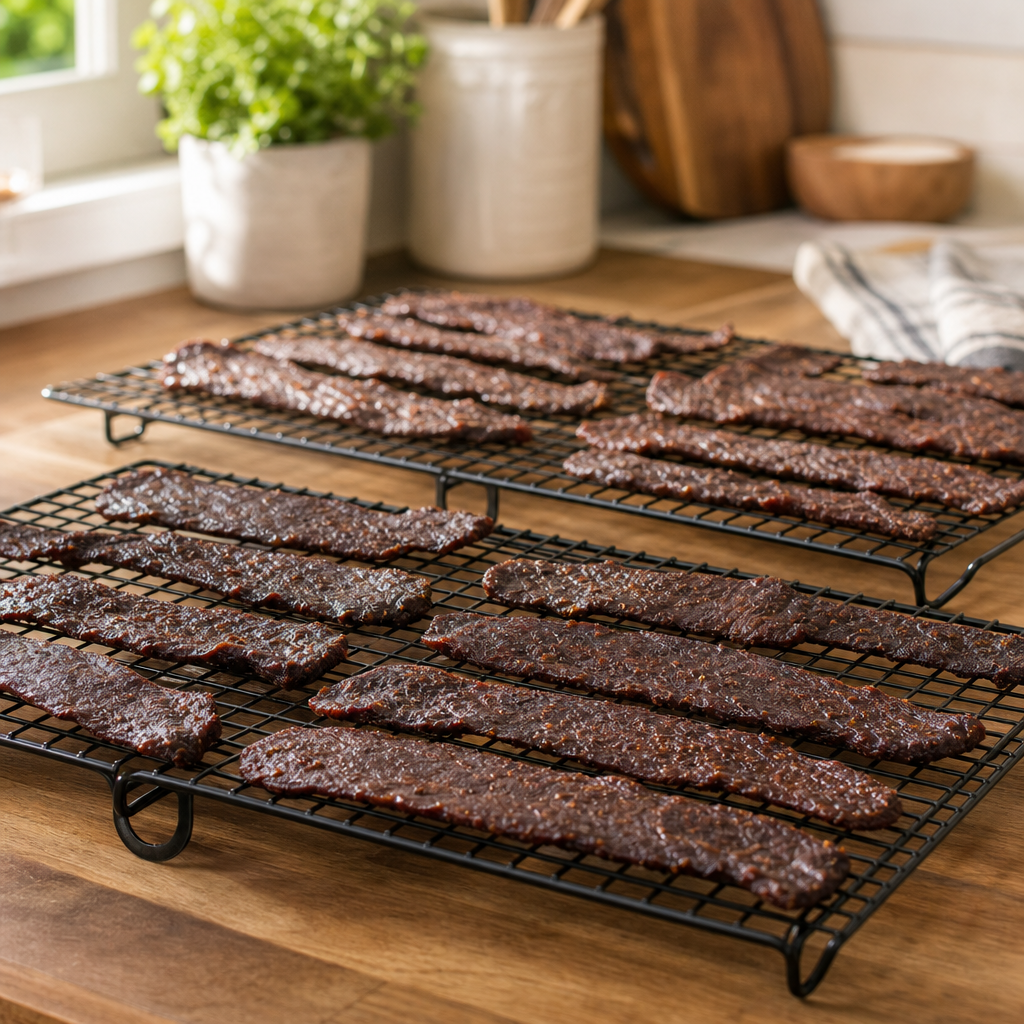
Step 4Let all jerky cool on racks until room temperature before storage.
Storage: Keep It Tasty, Keep It Safe
When jerky is fully cool, seal in airtight containers or heavy zip bags. At room temperature, enjoy within 1–2 months—though jerky rarely lasts that long in a snack-loving household! For best quality, especially if your kitchen is humid, refrigerate and enjoy within a month ([ask.fsis.usda.gov](https://ask.fsis.usda.gov/article/Is-jerky-safe-when-stored-at-room-temperature?utm_source=openai)).
A Hypothetical Example: Jamie’s Family Jerky Jar
Jamie was used to her family’s half-hearted smiles at store-bought jerky—always too tough, too sweet, or oddly bland. She tried this honey-soy garlic recipe for a long weekend. With just a little effort, her kitchen smelled amazing and the finished strips disappeared within days. Even the kid who “doesn’t like jerky” started sneaking strips straight from the jar.
Why It Works: The Science of Whisking & Marinating
A lot of jerky recipes rely on dump-and-stir marinades, but whisking the honey into the salty, umami base makes a difference. Honey is viscous—it wants to cling in globs or sink. Proper mixing means every slice of beef gets the same chance to soak up that signature sweet-savory-garlic profile, so the final batch tastes cohesive, never clumpy. Acidic ingredients like lemon also boost flavor and tenderize, turning ordinary lean beef into something with both great chew and depth.
Practical Ending: Tweak Every Batch Your Way
Try the recipe as written once, and see what you’d change for your own taste: more garlic, a hint of chili, or a swap to maple or agave instead of honey. Every home batch is a chance to learn—a kitchen project, a handful at a time.




). The easiest way is to briefly bake the strips in a 275°F oven (about 10–15 minutes) until the thickest piece hits 160°F, checking with an instant-read thermometer.](https://img-va.myshopline.com/image/store/1765922088837/c0a8226795264c9293b725f5838fcd4b.png?w=1024&h=1024)