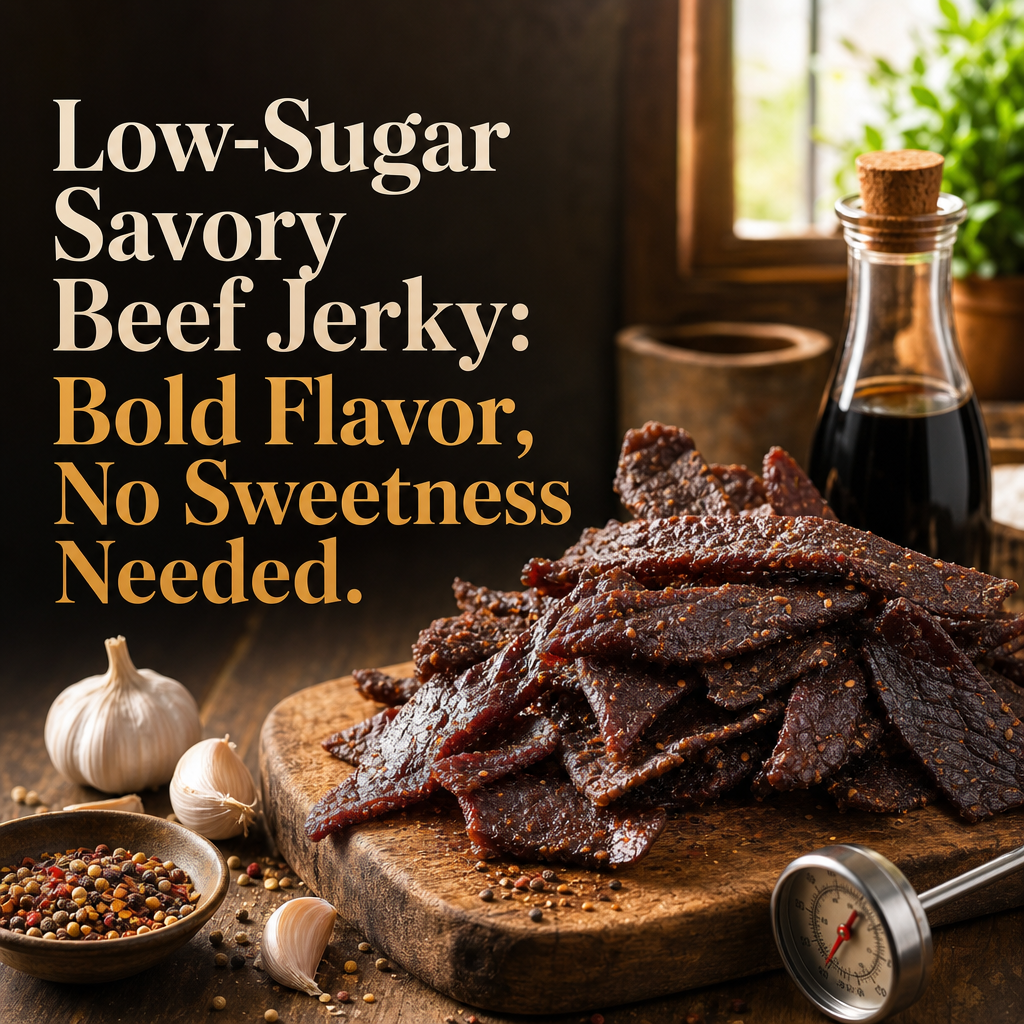
Low‑Sugar Savory Beef Jerky: Bold Flavor, No Sweetness Needed
Sep 27, 2026
BULK MOTIVATION
JERKY RECIPES
Low‑Sugar Savory Beef Jerky: Bold Flavor, No Sweetness Needed
Save this reminder for a day you need it. Image created with AI.
Low‑Sugar Savory Beef Jerky: Bold Flavor, No Sweetness Needed
If you’ve ever stood in front of the snack aisle, packs of jerky in hand, you might have wondered: why does nearly every option taste like sweet barbecue or sugary teriyaki? For those who crave something savory and deeply flavorful—with just the faintest hint of heat or smoke—homemade jerky offers the most freedom. But here’s the pleasant surprise: you don’t need sugar to build layers of bold jerky flavor at home. For fans of a classic, salt-forward chew with a punch of spice and soul-warming smokiness, a savory marinade—anchored by umami-rich ingredients and aromatic spice—delivers all the satisfaction, minus the sugar high (or crash).
You might expect a sugar-free or low-sugar jerky to be bland or harsh, but that’s not the case here. The trick is a marriage of dry spice rub and a punchy, low-sugar liquid base, with just enough salt, acid, and savory backbone to carry every bite. Even first-timers can pull this off: all it takes is a little patience and a willingness to mix up your own marinade. Let’s dig in to what makes this approach both practical and deeply delicious—starting with the one move that sets every batch in motion: mixing up that savory marinade.
Ingredients: What You’ll Need
2 lbs lean beef (eye of round, top round, bottom round, or flank), all visible fat trimmed
1 tsp coarse kosher salt
1 tsp smoked paprika
1 tsp garlic powder
1 tsp onion powder
½ tsp freshly cracked black pepper
½ tsp ground ginger
Optional: ½ tsp crushed red pepper flakes or cayenne
¼ cup low-sodium soy sauce or tamari
2 tbsp Worcestershire sauce (look for low-sugar varieties)
1 tbsp apple cider vinegar
½ tsp liquid smoke (optional, for extra smokiness)
Equipment: Sharp knife, small mixing bowl, large resealable bag or dish, wire rack and baking sheet or food dehydrator, food thermometer, airtight storage containers.
Marinade: The Sugar-Free Flavor Builder
Mix salt, smoked paprika, garlic powder, onion powder, pepper, ginger, and any optional pepper flakes in a bowl. In another bowl or cup, stir together the soy sauce, Worcestershire sauce, vinegar, and liquid smoke. Sprinkle the dry spice mixture over beef strips (slice the meat partially frozen for best results, about 1/8" thick), toss to coat, then pour the liquid marinade over the beef in a bag or bowl. Massage the marinade in so all strips are fully coated. Press out air, seal, and refrigerate at least 4 hours (overnight for boldest flavor).
Method: Slice, Marinate, Preheat, and Dry
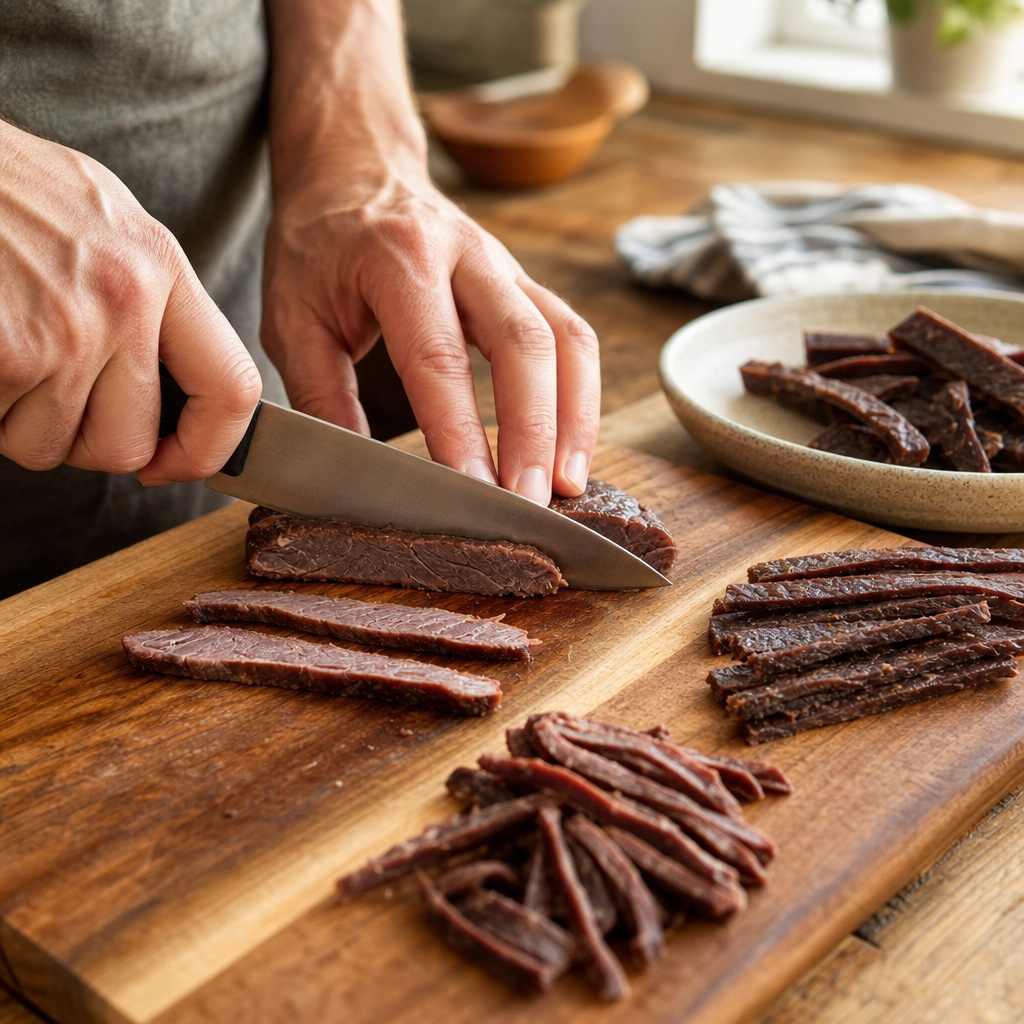
Step 1Slice meat across the grain for tender jerky (or with the grain for a tougher chew), aiming for 1/8"–1/4" thick strips.
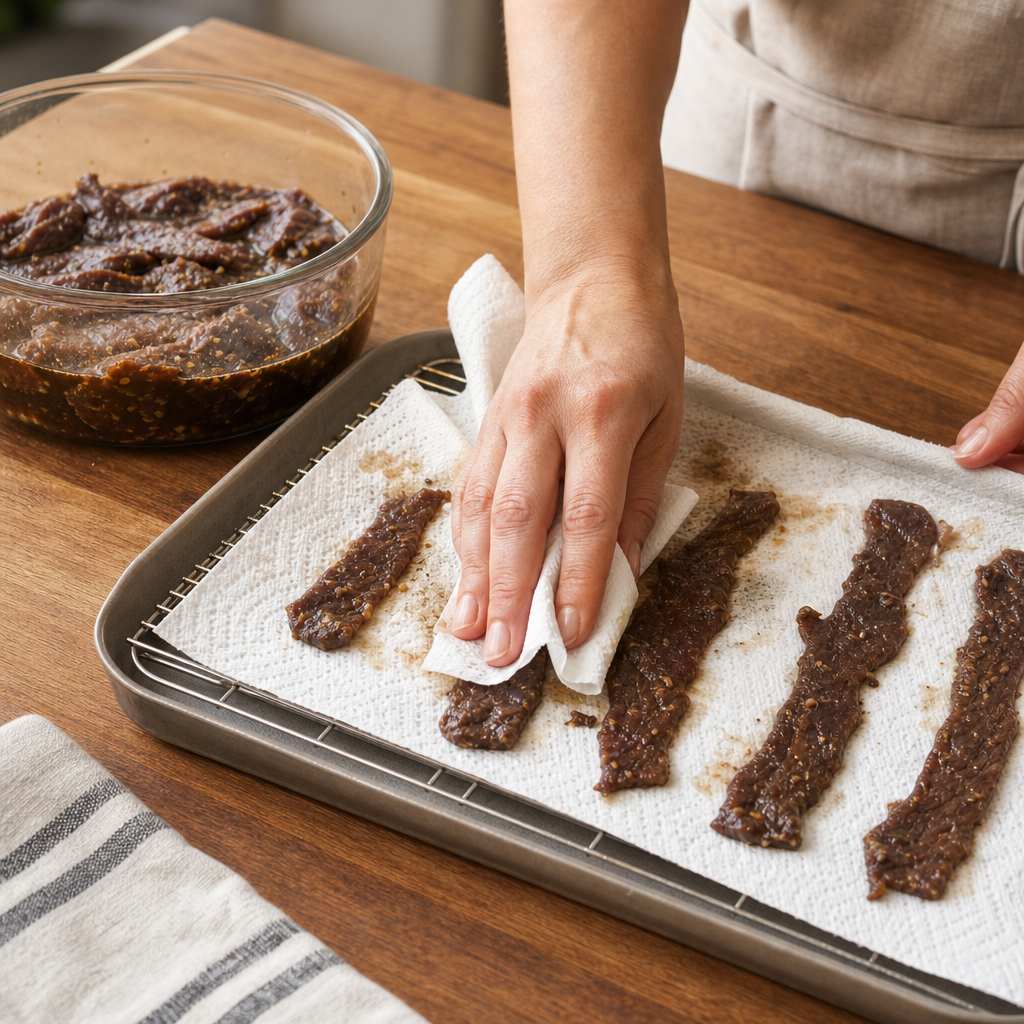
Step 2After marinating overnight, remove strips and blot them dry with paper towels.
Step 3Preheat your oven to 275°F. Arrange beef strips on a rack over a baking sheet in a single layer.
Food safety note: According to USDA guidance, always cook beef strips until they reach an internal temperature of 160°F before or during drying. This destroys pathogens that marinade and even gradual dehydration may not always eliminate ([USDA Jerky Safety](https://www.fsis.usda.gov/food-safety/safe-food-handling-and-preparation/meat-fish/jerky?utm_source=openai)). Discard all leftover marinade.
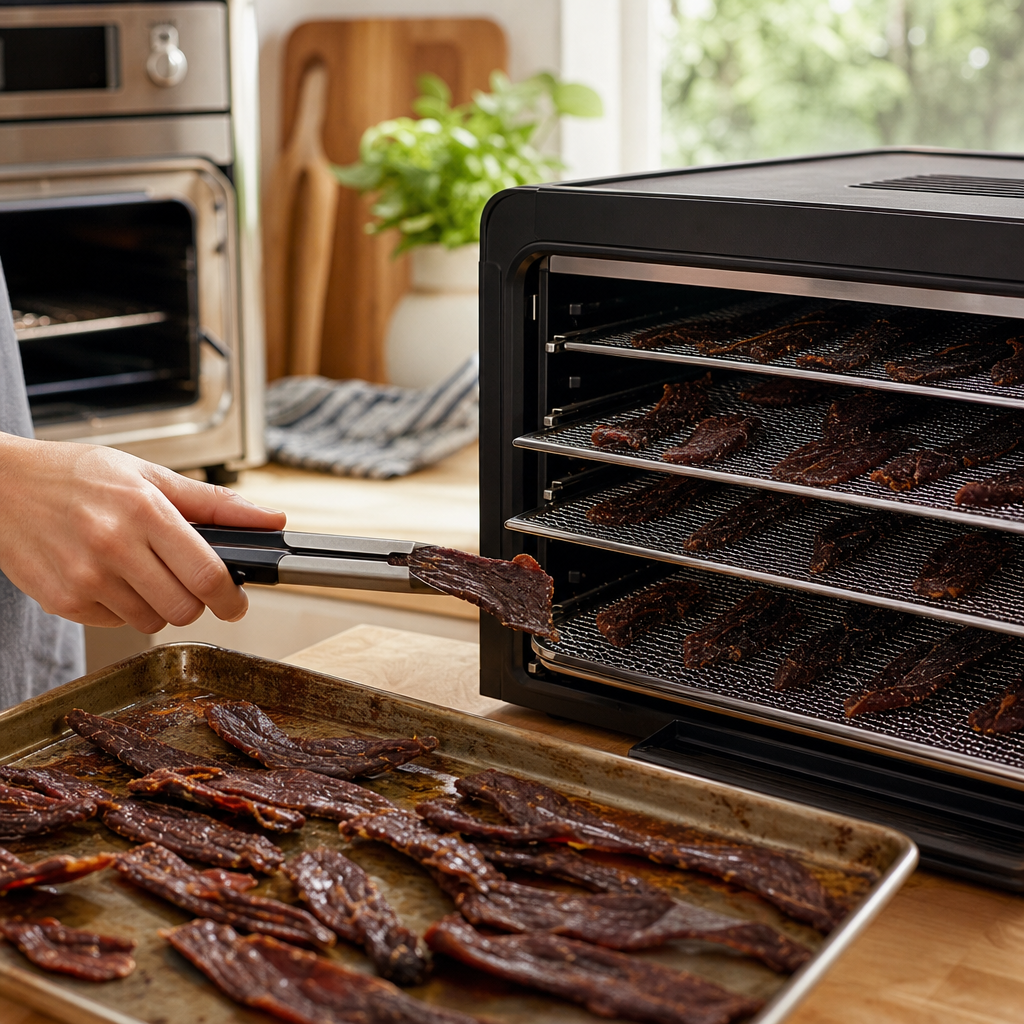
Step 4Once every strip hits 160°F (use an instant-read thermometer, usually about 10–15 minutes), transfer the strips to a dehydrator set at 130–140°F, or return to an oven at its lowest setting with the door propped slightly open. Dry for 4–6 hours, checking for doneness: Jerky should bend and crack but not snap when cool.
Storage: Keep It Fresh, Keep It Safe
Cool jerky completely before sealing in an airtight bag or container. Homemade jerky without added preservatives is best kept in the fridge for maximum freshness and flavor, and eaten within 1–2 weeks. For longer storage, freezing is safest ([USDA Jerky Safety](https://www.fsis.usda.gov/food-safety/safe-food-handling-and-preparation/meat-fish/jerky?utm_source=openai)).
A Hypothetical Example: Chris’s Jerky Test Batch
Chris, tired of overly sweet store-bought snacks, tries making his own jerky for a weekend hike. He mixes the savory marinade, lets the beef soak overnight, heats the strips to 160°F, and finishes them in a countertop dehydrator. His jerky is smoky, bold, and a bit spicy—none of his hiking friends miss the sugar.
Why It Works: The Surprising Sweetness of Umami
Without sugar, you might think jerky would taste flat. But umami—the deep savory flavor from soy sauce, Worcestershire, and smoked spices—creates a flavor “roundness” that draws out the natural savoriness in beef. Add acid from vinegar, a flicker of smoke, and spices that bloom as they dry, and you get complex, craveable meat with no need for added sweetness.
Practical Ending: Taste, Tinker, and Enjoy Each Batch
Try this recipe once as written; then, experiment—add more pepper, swap smoked paprika for chipotle, or try a different acid. Your kitchen, your snack: it’s never been easier (or more satisfying) to make jerky exactly the way you want.



). Discard all leftover marinade.](https://img-va.myshopline.com/image/store/1765922088837/c5c4df9a0b664af1ba6d277fb0193edb.png?w=1024&h=1024)