



JERKY RECIPES
Coffee & Brown Sugar Jerky: A Bold, Balanced Snack
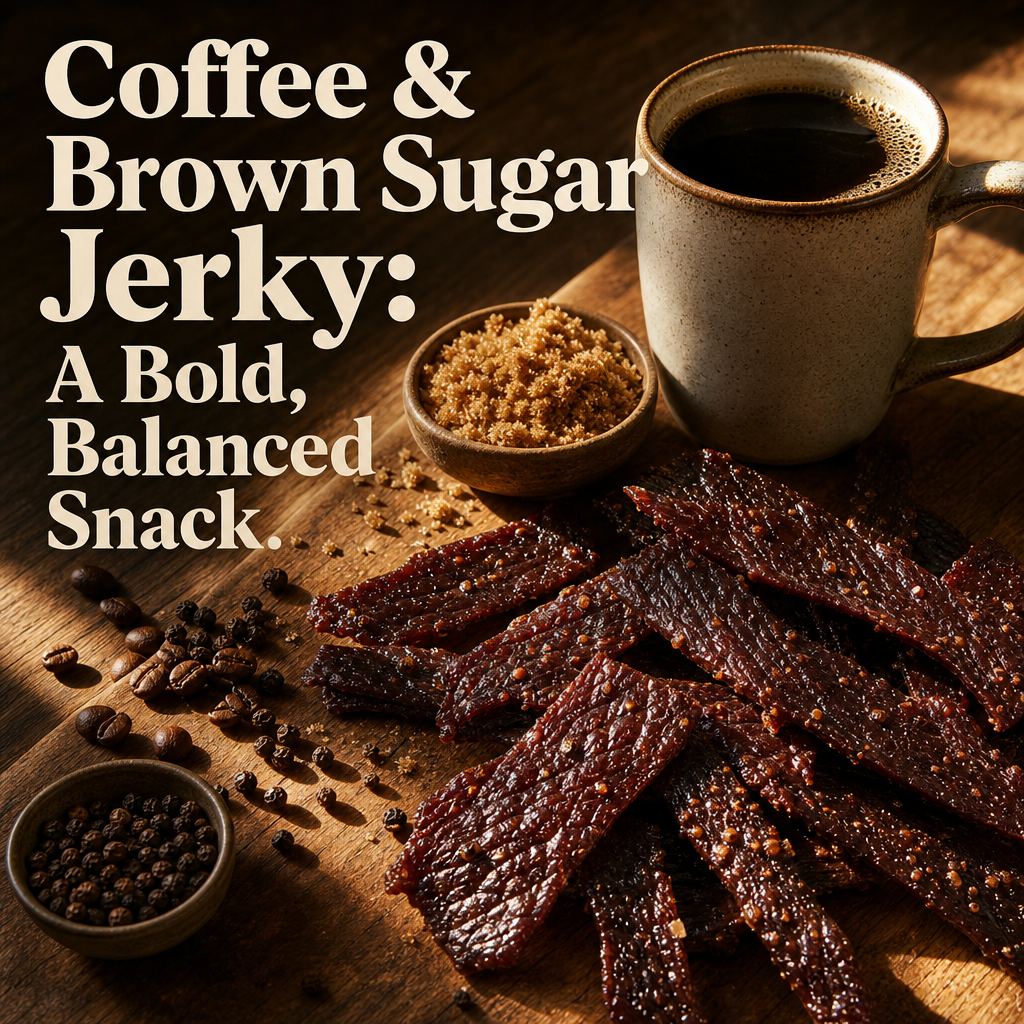
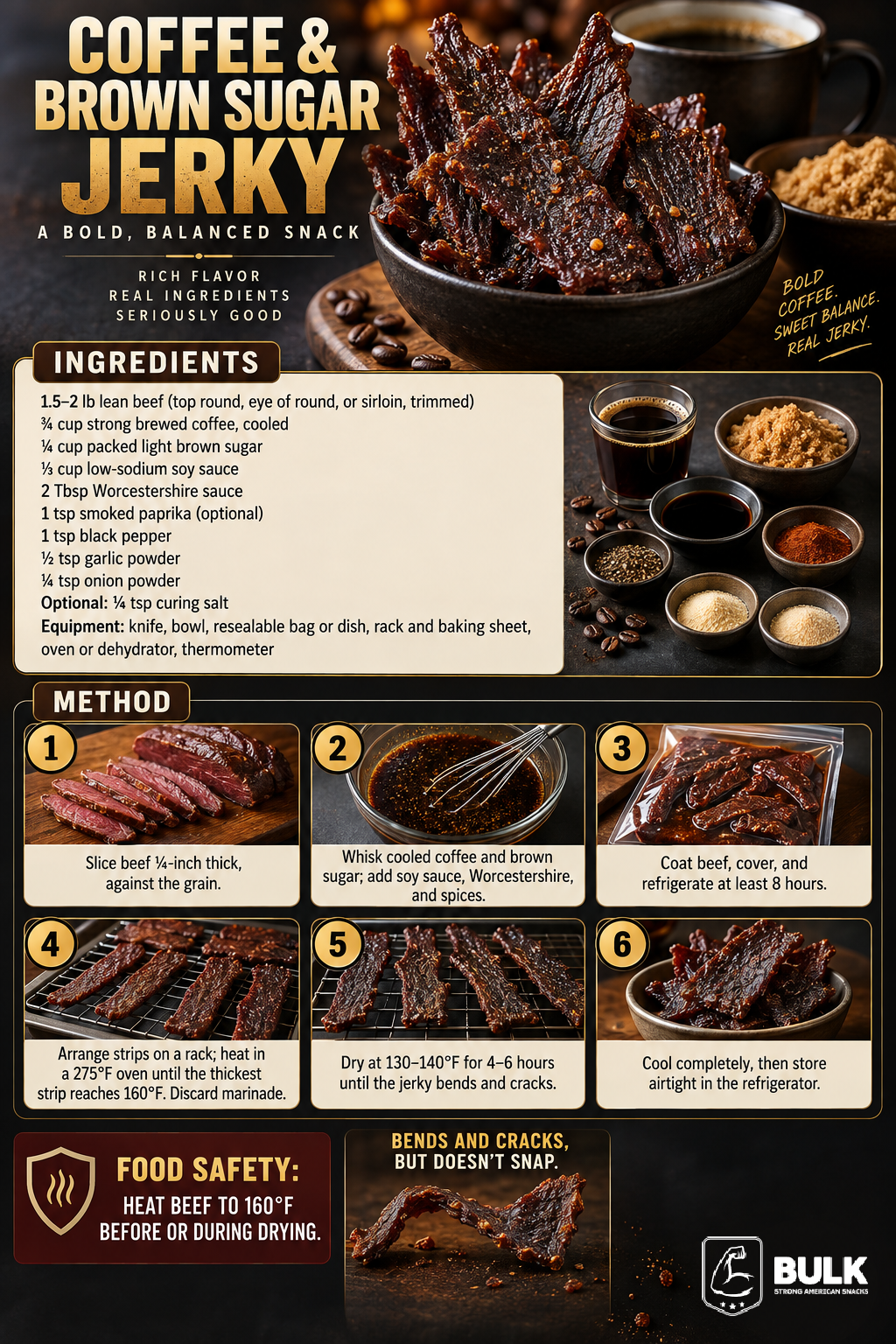
Coffee & Brown Sugar Jerky: A Bold, Balanced Snack
Picture coming in from a crisp walk, boots off, holding a handful of homemade beef jerky—the kind that makes the whole kitchen smell a little like a cozy café. If you grew up on classic black pepper or teriyaki jerky, the idea of coffee and brown sugar might sound a bit wild. But trust me: for home cooks and jerky fans, this combo isn’t just about novelty. Coffee’s roastiness pairs with brown sugar’s warmth, enriching the beef while gently softening each strip. The result is a savory-sweet treat that feels both rugged and indulgent. Ready to see how simple it can be? Let’s build the flavor base together, layering on a step you might not have tried before: whisking real brown sugar into freshly brewed coffee for your marinade.
Ingredients: What You'll Need
- 1.5–2 lb lean beef (top round, eye of round, or sirloin trimmed of fat)
- ¾ cup strong brewed coffee, cooled to room temperature
- ¼ cup packed light brown sugar
- ⅓ cup low-sodium soy sauce
- 2 Tbsp Worcestershire sauce
- 1 tsp smoked paprika (optional, for depth)
- 1 tsp black pepper
- ½ tsp garlic powder
- ¼ tsp onion powder
- (Optional: ¼ tsp curing salt, see notes for safety)
- Equipment: sharp knife, bowl for marinade, resealable bag or glass dish, wire rack and baking sheet, oven or dehydrator, instant-read thermometer.
Marinade: Where Coffee & Sugar Meet
Start by brewing a fresh, robust cup of coffee—whatever you like to drink works fine, but go bold if you want deeper flavor. Let it cool to room temp. In a mixing bowl, vigorously whisk the brown sugar into the coffee until fully dissolved. (The warmth helps this go quickly.) Add the soy sauce, Worcestershire, spices, and any optional curing salt. Stir until blended, then set aside.
While the marinade melds, slice the beef against the grain for tenderness (or with the grain for chew), aiming for strips about ¼-inch thick. Add all beef pieces to the marinade, ensuring full submersion. Cover and refrigerate overnight for the richest flavor (at least 8 hours).
Method: Safety First, Then Flavor
After marinating, remove the strips and gently pat dry with paper towels. **Food safety note:** The USDA recommends all homemade jerky be heated to an internal temp of at least 160°F before or during drying. This step destroys bacteria that can survive the marinade and drying process ([USDA Jerky Guidance](https://www.fsis.usda.gov/food-safety/safe-food-handling-and-preparation/meat-fish/jerky?utm_source=openai)). The easiest approach is to lay the beef strips in a single layer on a wire rack over a baking sheet and bake in a preheated 275°F oven just until the thickest piece hits 160°F—usually 10–15 minutes. Discard any leftover marinade. After cooking, set the beef strips in a dehydrator set to 130–140°F, or keep them on a rack in the oven at its lowest setting (door slightly open) for airflow. Dry 4–6 hours, checking occasionally. Finished jerky should bend and crack but not snap—cool a piece to room temp before testing.
Storage: Simple, Safe, Fresh
Cool jerky completely on racks before storing. For best freshness, keep in an airtight container or zip bag in the fridge. Homemade jerky, free from preservatives, is at its tastiest within two weeks, but you can freeze extras for long-term storage. (See more on food safety and shelf life at [USDA Jerky Guidance](https://www.fsis.usda.gov/food-safety/safe-food-handling-and-preparation/meat-fish/jerky?utm_source=openai)).
A Hypothetical Example: Jordan’s “Whoa, What’s in This?”
Jordan usually makes regular salty jerky for backpacking trips, but he wants to impress his hiking buddies with something more memorable. This time he stirs up a marinade with real coffee and brown sugar, letting the strips soak overnight. On the trail, his friends pause after the first bite—there’s cozy depth, like a campfire and breakfast in one, with just a trace of caramel at the end. By day two, nobody misses the old recipe.
Why Coffee Works (A Surprising Detail)
It’s not only for a quirky flavor hit. Real brewed coffee adds subtle bitterness and acidity, helping brown sugar caramel notes “pop” without being too sweet. It also acts as a mild tenderizer and carries other flavors deep into the beef strips. It’s a little, habitual kitchen magic—one small step that transforms average jerky into something with genuine character.
Practical Ending: Taste, Adjust, Share
Try your first batch with this base, then start playing. Maybe next time, double the black pepper, add a shot of espresso, or even sprinkle in a pinch of cayenne. Taste as you go, and remember: every homemade jerky recipe ends up a little personal.