



JERKY RECIPES · FROM THE VIDEO TO YOUR KITCHEN
Honey Jalapeño Pineapple Beef Jerky on a Pellet Smoker
A honey-rich marinade, sliced jalapeño, and a smoky finish.
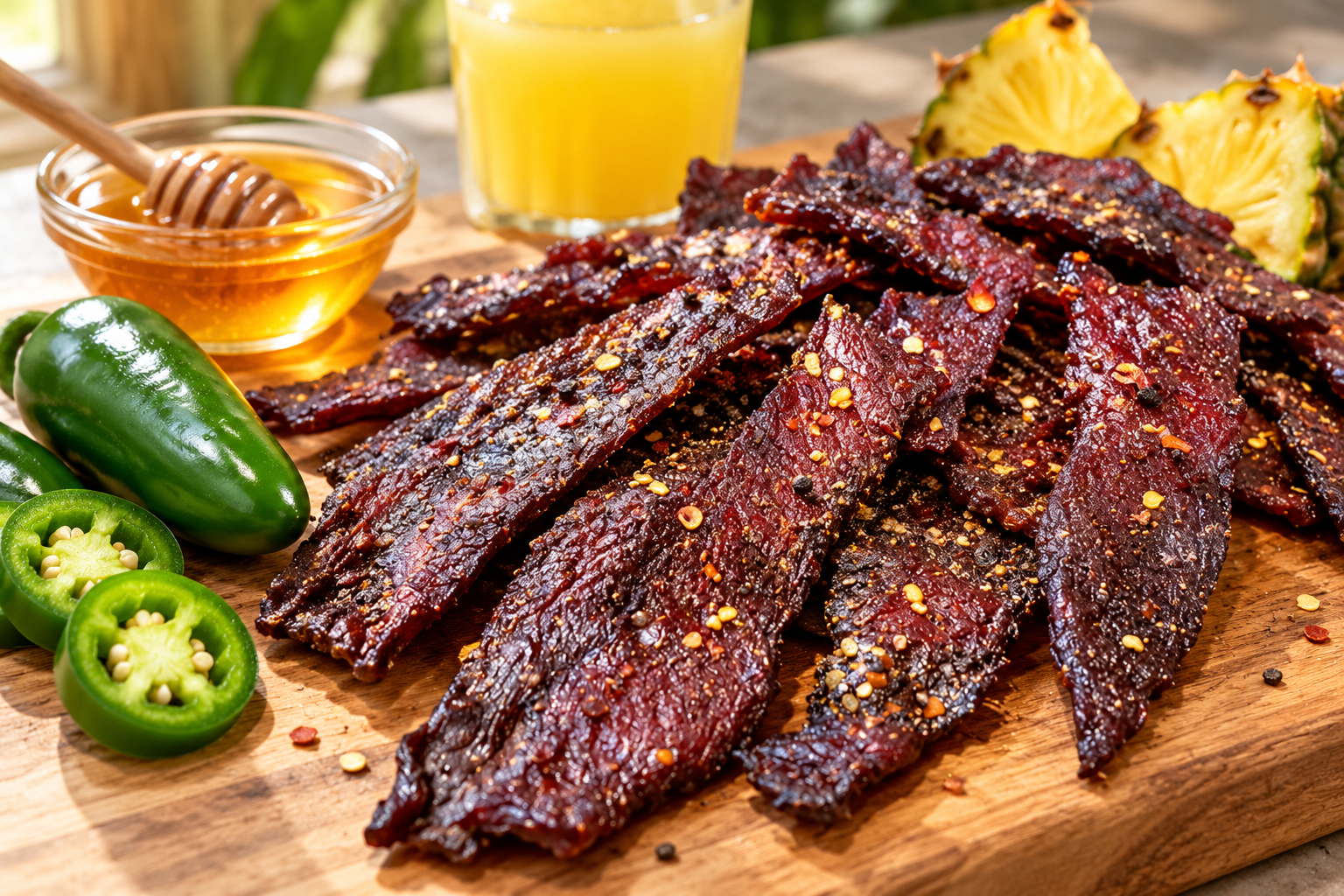
Honey is the main sweetener in this pellet-smoker recipe, with pineapple juice loosening the marinade and jalapeño adding both fresh pepper flavor and heat. Behind The Garage BBQ uses liquid aminos, Worcestershire, jalapeño hot sauce, and a sliced pepper before finishing the beef with an optional honey rub and chili flakes. The result shown is broad, reddish-brown jerky with visible seasoning on its surface.
Inspired by Behind the Garage BBQ's original video. Watch the preparation below, then use this clearly labeled BULK adaptation for your own starting batch.
Watch the original video
Video by Behind the Garage BBQ · Watch on YouTube
Ingredients
Starting batch: about 2 lb lean bottom round. Equipment: pellet smoker. Drying time varies with thickness and equipment.
- 2 lb lean bottom round, trimmed and sliced about 1/8 inch thick
- 1/4 cup pineapple juice
- 1/2 cup honey
- 1/2 cup liquid aminos, or soy sauce as offered in the video
- 3 tbsp jalapeño hot sauce
- 2 tbsp Worcestershire sauce
- 1 tbsp garlic powder
- 1 tbsp onion powder
- 1 tbsp ground black pepper
- 2 tbsp brown sugar
- 1 jalapeño, thinly sliced
- A light dusting of honey barbecue rub and crushed red pepper, optional
Method
1. Trim and slice
Trim all visible fat and silver skin. Briefly chill the roast until firm enough to slice, then cut even strips about 1/8–1/4 inch thick. Slice across the grain for an easier chew. Keep the beef refrigerated while you prepare the marinade.
2. Mix the flavor base
Whisk the pineapple juice, honey, liquid aminos, hot sauce, and Worcestershire until the honey blends into the liquids. Stir in garlic, onion, black pepper, brown sugar, and sliced jalapeño. Break apart stacked beef slices as you add them so the thick marinade reaches every face.
3. Marinate in the refrigerator
Cover and refrigerate for at least 6 hours or overnight, turning the slices occasionally. The creator uses a marinade tumbler; a covered container or food-safe zip bag in the refrigerator is the accessible alternative he gives.
4. Heat before drying
Before drying, heat the marinated beef to an internal 160°F using moist heat, such as simmering it in its marinade. Measure several of the thickest pieces with a food thermometer; do not infer the meat temperature from the smoker or dehydrator setting. This is BULK’s safety addition to the source method.
5. Dry with room for airflow
After heating, drain and blot away excess wet marinade. Lay the slices on smoker-safe racks without overlapping. Add only a light dusting of the optional honey rub and chili flakes. Dry in a pellet smoker set around 180°F, checking the actual chamber temperature and moving racks when needed. The source's approximate cook time is an example, not a doneness guarantee.
6. Check, cool, and refrigerate
Look for a dry exterior and a chewy bend in a cooled strip. A thick honey marinade can darken before the middle dries, so inspect a cross-section instead of judging by color alone. Remove thinner pieces first rather than overdrying the entire tray while you wait for thicker ones. Cool fully before sealing. Refrigerate the finished batch in a clean airtight container, or freeze portions for longer storage. This homemade recipe is not validated as shelf-stable.
The illustrated method
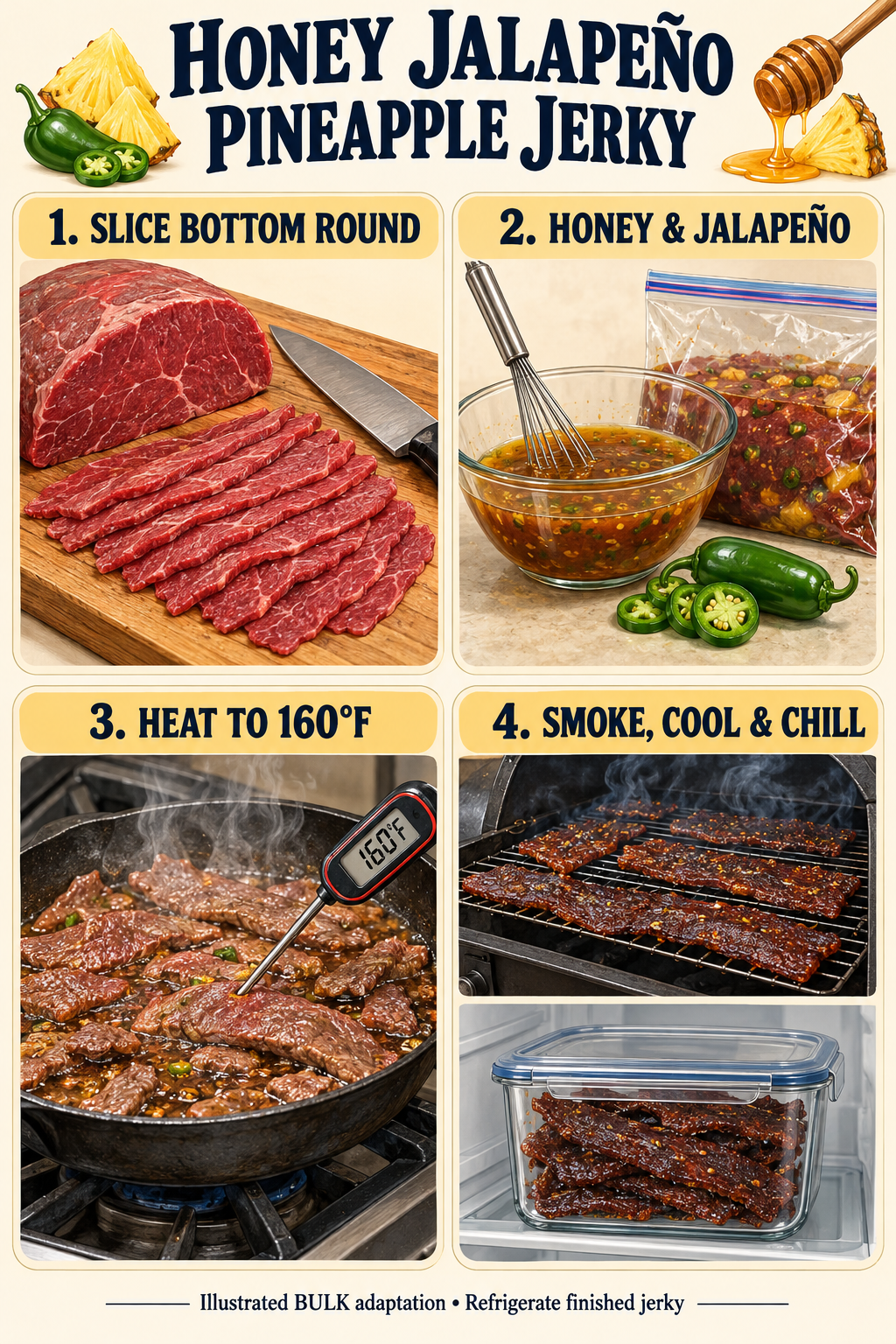
Build heat in two layers
The jalapeño hot sauce seasons the liquid, while the fresh slices contribute a different pepper note. Chili flakes on the surface create a third, more immediate bite, so leave them out on the first batch if your hot sauce is already assertive. Honey can leave sticky patches; a careful blot before the racks helps the pieces dry more evenly without washing away the flavor.
Heating and storage
Cook before drying, use clean tools, and keep raw meat and its juices away from finished jerky. Cool the finished strips before packing them, then refrigerate. See the USDA jerky food-safety guidance for the heat-before-drying recommendation. A dry appearance alone does not establish safe room-temperature storage.