



JERKY RECIPES · FROM THE VIDEO TO YOUR KITCHEN
Hickory BBQ Beef Jerky with a Simple Two-Sauce Marinade
Soy sauce and hickory barbecue sauce do the heavy lifting.
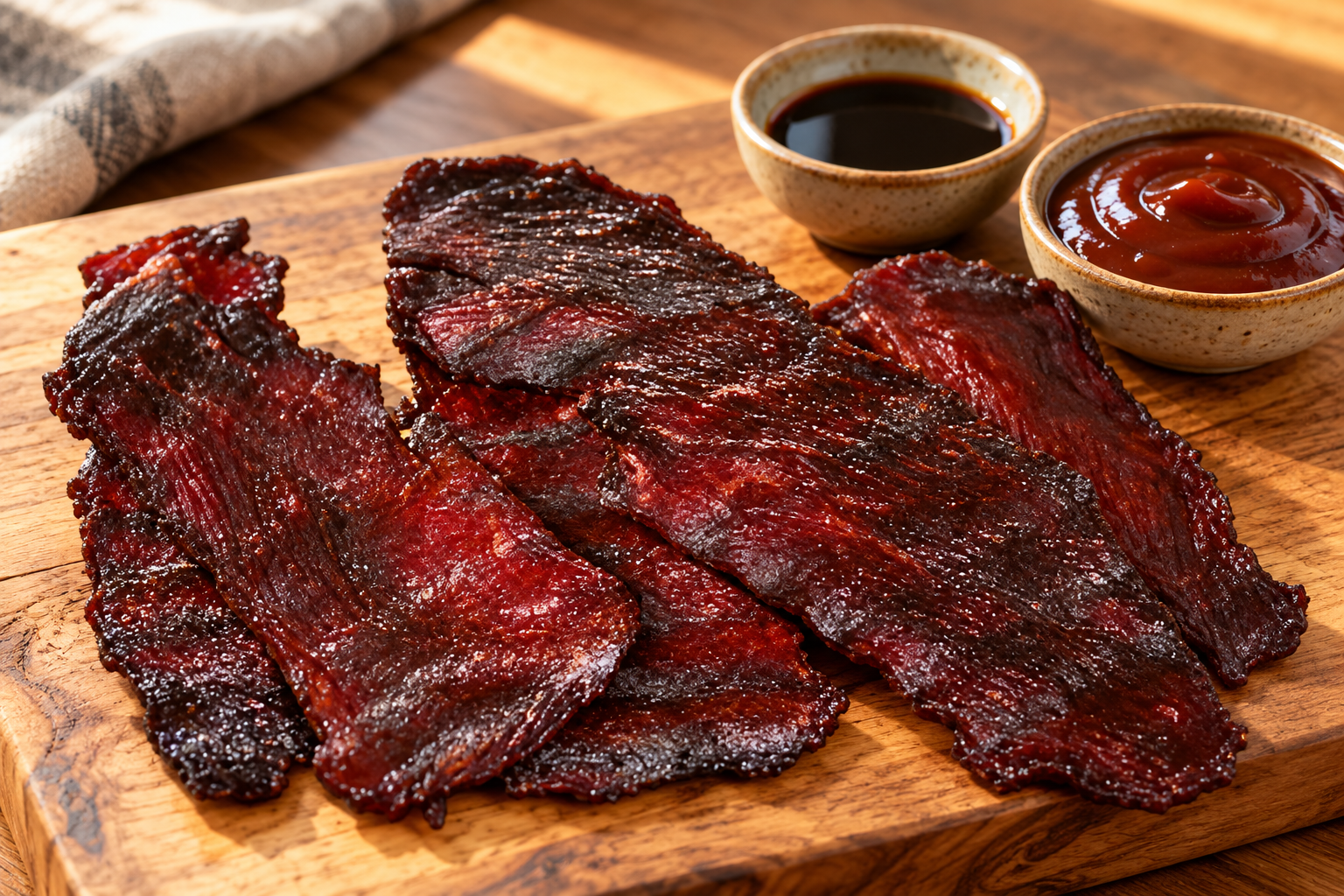
This is the pantry-friendly end of homemade jerky: a salty soy base, a sweet hickory barbecue sauce, and very little measuring or mixing. Prepper Princess coats broad strips of beef in the two sauces, then dries them into dark, flat pieces. The barbecue sauce supplies the sweetness and smoky character, so a long list of extra spices is unnecessary.
Inspired by Prepper Princess's original video. Watch the preparation below, then use this clearly labeled BULK adaptation for your own starting batch.
Watch the original video
Video by Prepper Princess · Watch on YouTube
Ingredients
Starting batch: 2 lb lean beef. Equipment: dehydrator. Drying time varies with thickness and equipment.
- 2 lb lean beef eye of round or top round, visible fat and silver skin removed
- 1/2 cup soy sauce
- 1/2 cup hickory barbecue sauce
- 1 tbsp Worcestershire sauce, optional
- 1/4 tsp liquid smoke, optional
Method
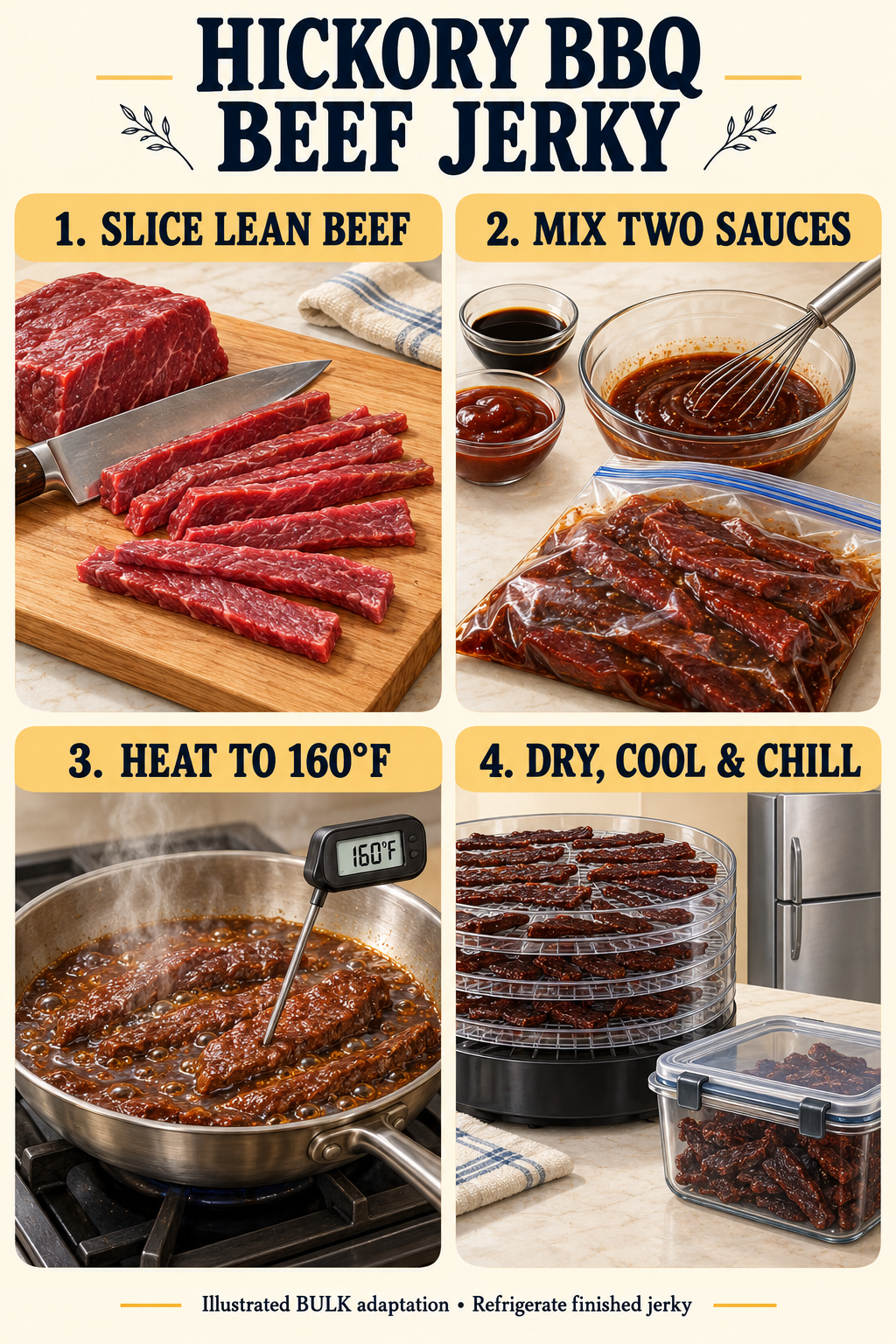
1. Trim and slice
Trim all visible fat and silver skin. Briefly chill the roast until firm enough to slice, then cut even strips about 1/8–1/4 inch thick. Slice across the grain for an easier chew. Keep the beef refrigerated while you prepare the marinade.
2. Mix the flavor base
Whisk the soy sauce and hickory barbecue sauce together. Add Worcestershire or a small amount of liquid smoke only if you want the optional flavor changes shown in the video. The barbecue sauce already contributes sweetness; this version leaves out the video's optional honey.
3. Marinate in the refrigerator
Coat the separated beef slices, cover, and refrigerate for 30 minutes, following the short marinade demonstrated in the source. Turn the slices so both faces contact the sauce.
4. Heat before drying
Before drying, heat the marinated beef to an internal 160°F using moist heat, such as simmering it in its marinade. Measure several of the thickest pieces with a food thermometer; do not infer the meat temperature from the smoker or dehydrator setting. This is BULK’s safety addition to the source method.
5. Dry with room for airflow
Drain and lightly blot the cooked slices, keeping a thin coating of sauce rather than thick pools. Spread them on dehydrator trays with space between pieces. After the heating step, dry at 140°F in an adjustable dehydrator; rotate trays if your machine dries unevenly. Check individual pieces rather than relying on a single time.
6. Check, cool, and refrigerate
Aim for flexible, flat pieces with a dry surface. Test a cooled piece: it should bend and begin to crack without feeling wet in the middle. A glossy barbecue coating can make the outside look moist even after drying, so check the center as well. Cool fully before sealing. Refrigerate the finished batch in a clean airtight container, or freeze portions for longer storage. This homemade recipe is not validated as shelf-stable.
The illustrated method
Let the barbecue sauce set the flavor
A hickory sauce gives this batch a different character from a hot vinegar barbecue sauce. Choose a sauce you already like and check its ingredients for allergens. If it is especially thick, spread it over the slices thoroughly instead of adding more and leaving heavy patches that dry slowly. Keep the optional smoke restrained because the sauce may already contain smoke flavor.
Heating and storage
Cook before drying, use clean tools, and keep raw meat and its juices away from finished jerky. Cool the finished strips before packing them, then refrigerate. See the USDA jerky food-safety guidance for the heat-before-drying recommendation. A dry appearance alone does not establish safe room-temperature storage.