JERKY RECIPES · FROM THE VIDEO TO YOUR KITCHEN
Dill Pickle Ground Beef Jerky
Six photo steps. A credited source video. A recipe guide to save.
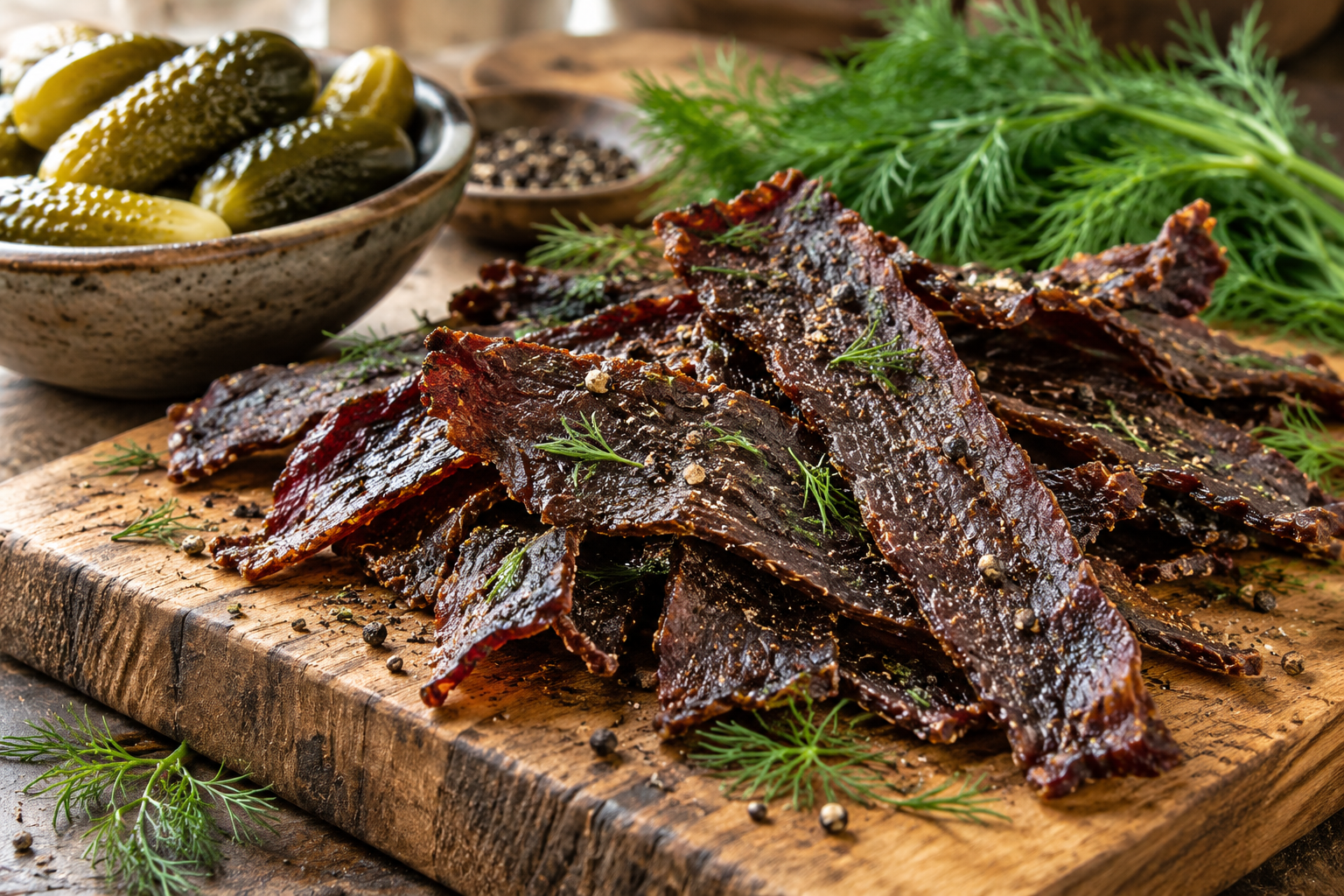
Dill pickle seasoning turns lean ground beef into a tangy, garlicky jerky with a clear herbal finish. Howie The Butcher demonstrates this version with a jerky gun, giving the strips an even ribbon shape. Unlike a sweet bread-and-butter pickle marinade, this recipe uses a dry kosher-dill seasoning and no added sugar.
Watch the original video
Video by Howie The Butcher · Watch on YouTube
Ingredients
Starting batch: 2 lb raw ground beef; finished yield varies.
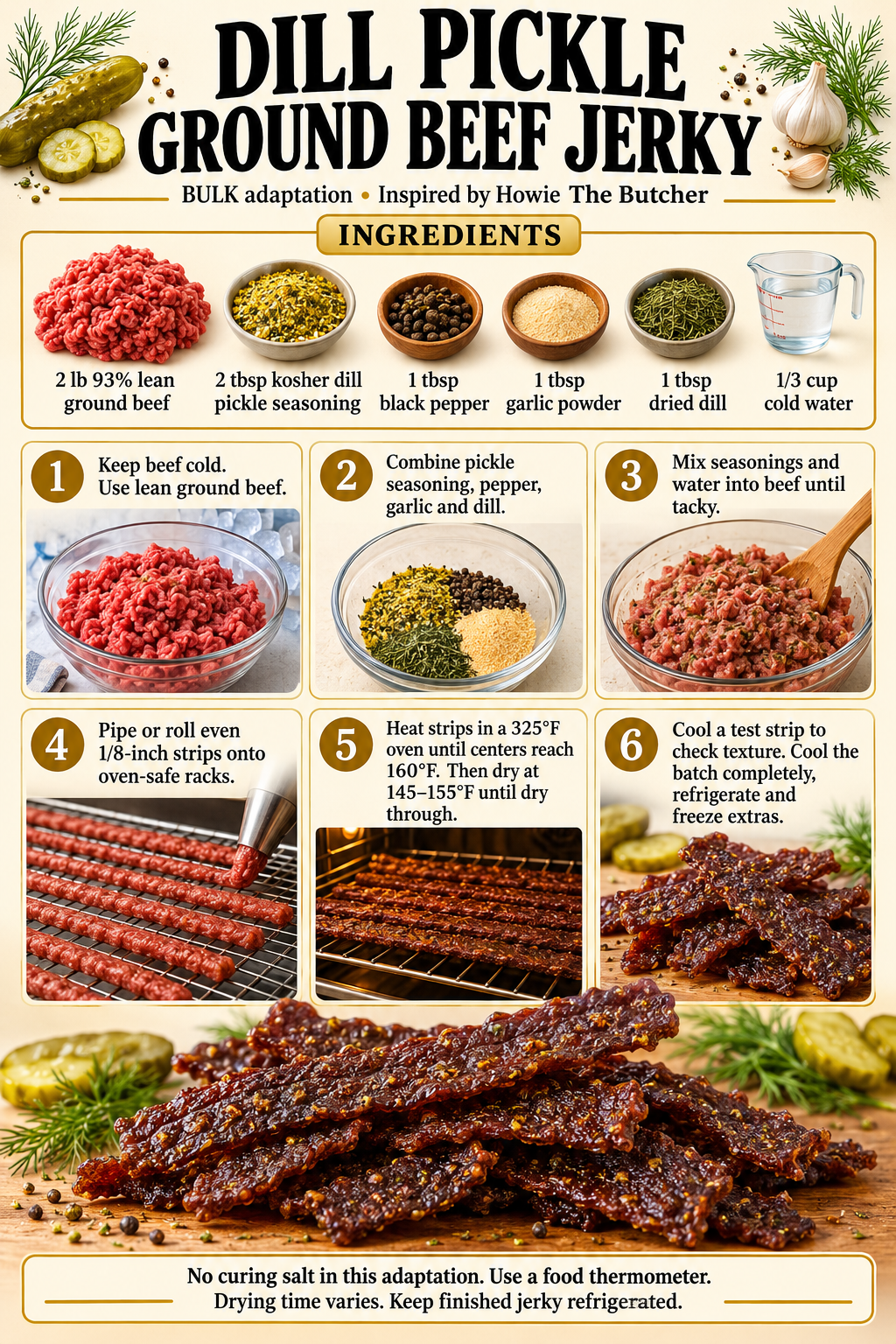
- 2 lb 93% lean ground beef
- 2 tbsp kosher dill pickle seasoning mix
- 1 tbsp ground black pepper
- 1 tbsp garlic powder
- 1 tbsp dried dill weed
- 1/3 cup cold water
Equipment: sharp knife, cutting board, kitchen scale, covered food-safe container, oven, oven-safe racks, thin-tip food thermometer, clean tongs, and an adjustable-temperature dehydrator.
Allergens: Pickle seasoning blends vary; check the package for mustard, wheat, soy or other allergens.
How to make this jerky
Step 1: Start with lean, cold beef
Use 93% lean ground beef and keep it refrigerated at 40°F or below until mixing. Wash hands and clean the work surface before handling it. Lean beef produces less grease than a fattier blend, but it still needs refrigerated storage after drying.
Step 2: Measure the dill seasoning
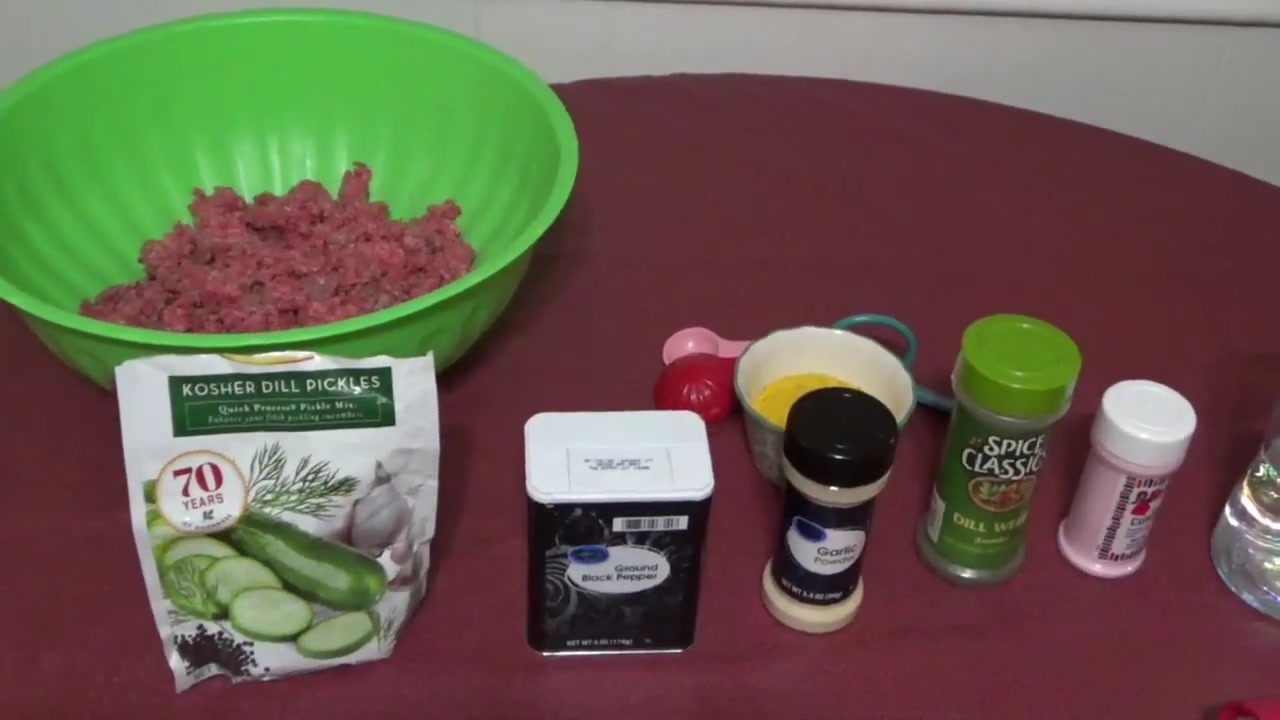
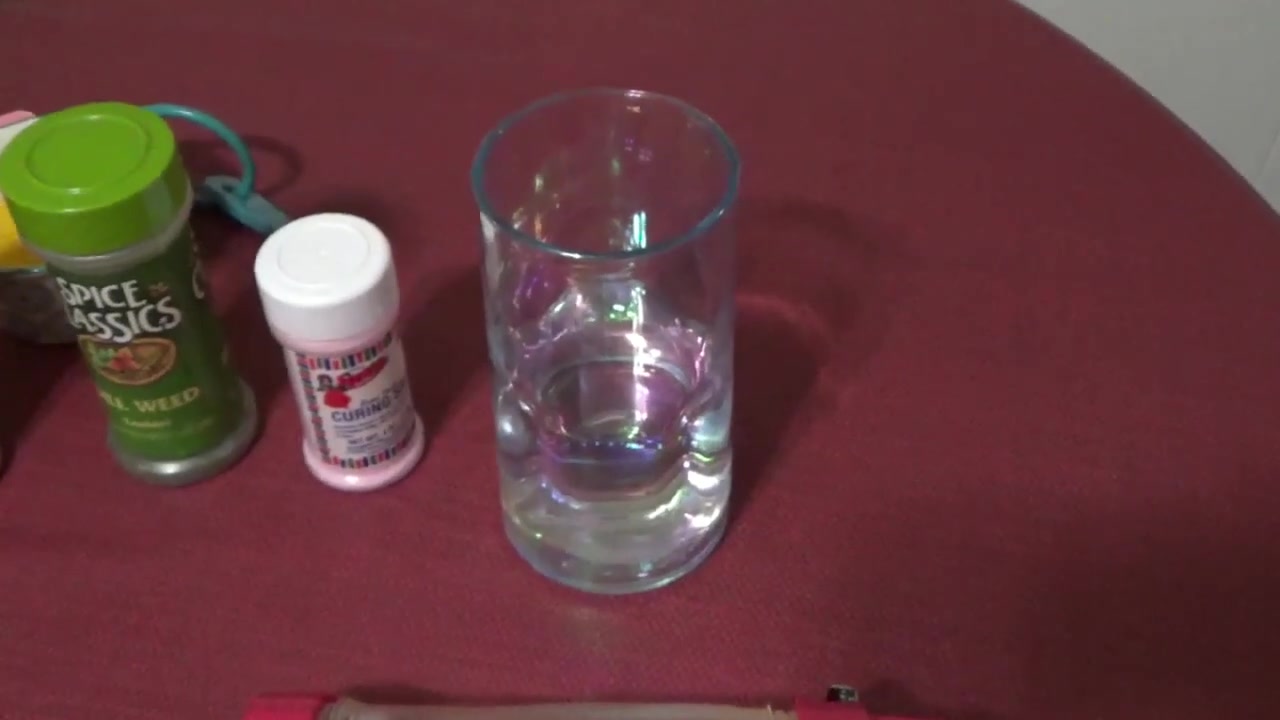
Combine the pickle seasoning, black pepper, garlic powder and dried dill in a small bowl. Use a kosher dill PICKLE seasoning mix, rather than plain dill or an unmeasured scoop of pickling salt. Brand salt levels differ, so compare labels before substituting.
Step 3: Mix until the meat becomes tacky
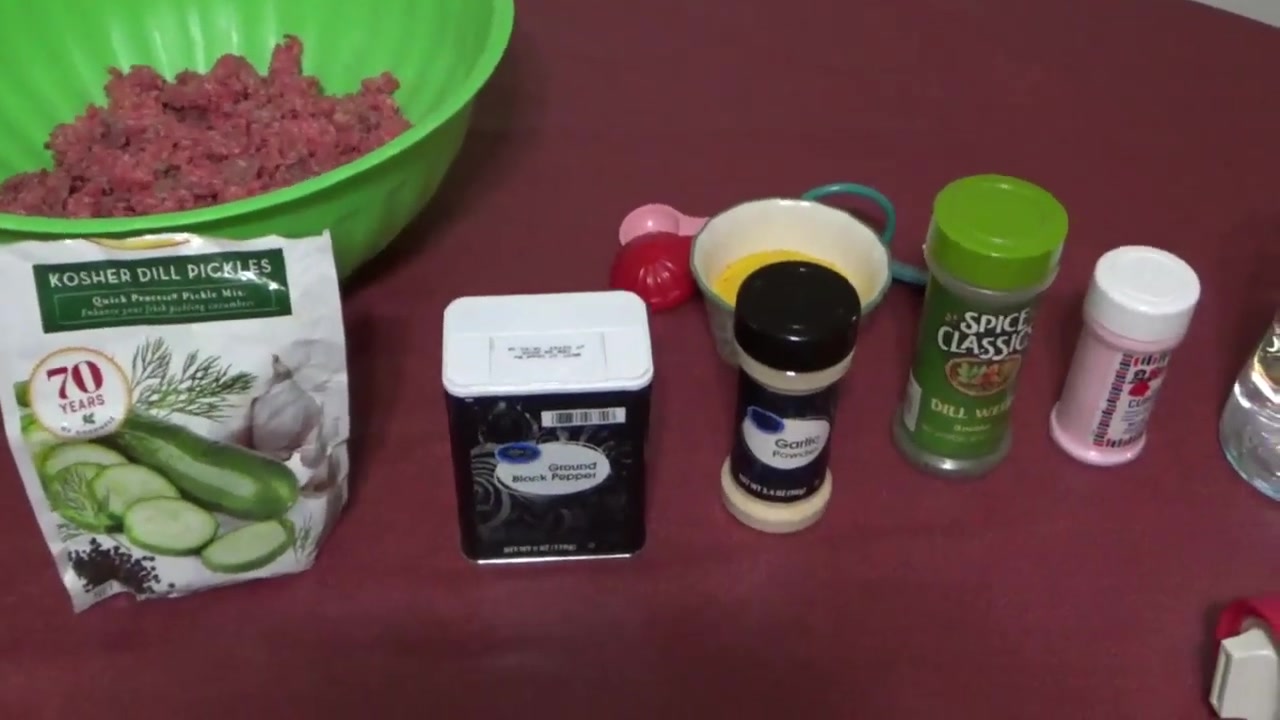
Add the spice mixture and 1/3 cup cold water to the beef. Mix thoroughly with clean hands or a sturdy spoon until the mixture is evenly seasoned and slightly tacky. Do not add the curing salt shown in the source ingredient lineup; it is omitted from this adaptation.
Step 4: Form even strips
Pipe the beef through a clean jerky gun or roll it between sheets of parchment and cut into ribbons about 1/8 inch thick. Transfer to oven-safe racks over rimmed baking sheets, leaving spaces between strips. Use metal oven-safe racks for the heating step; plastic dehydrator trays generally do not belong in an oven.
Step 5: Heat to 160°F, then dry
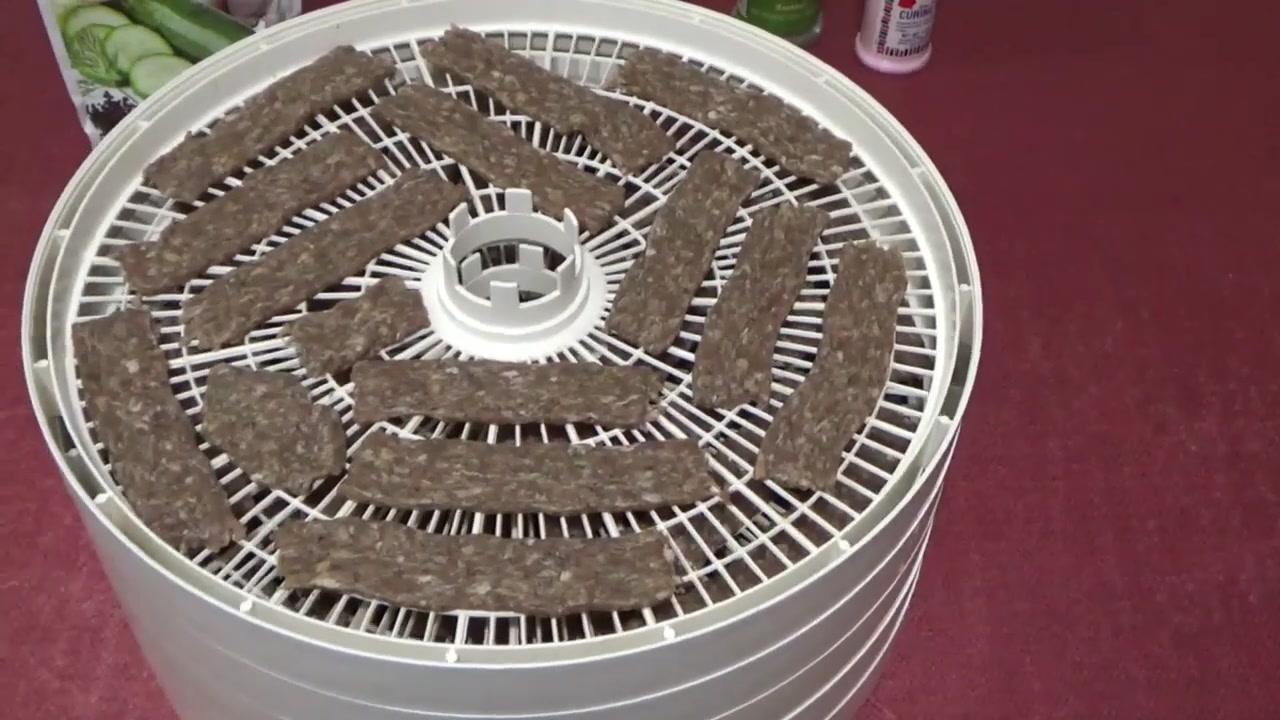
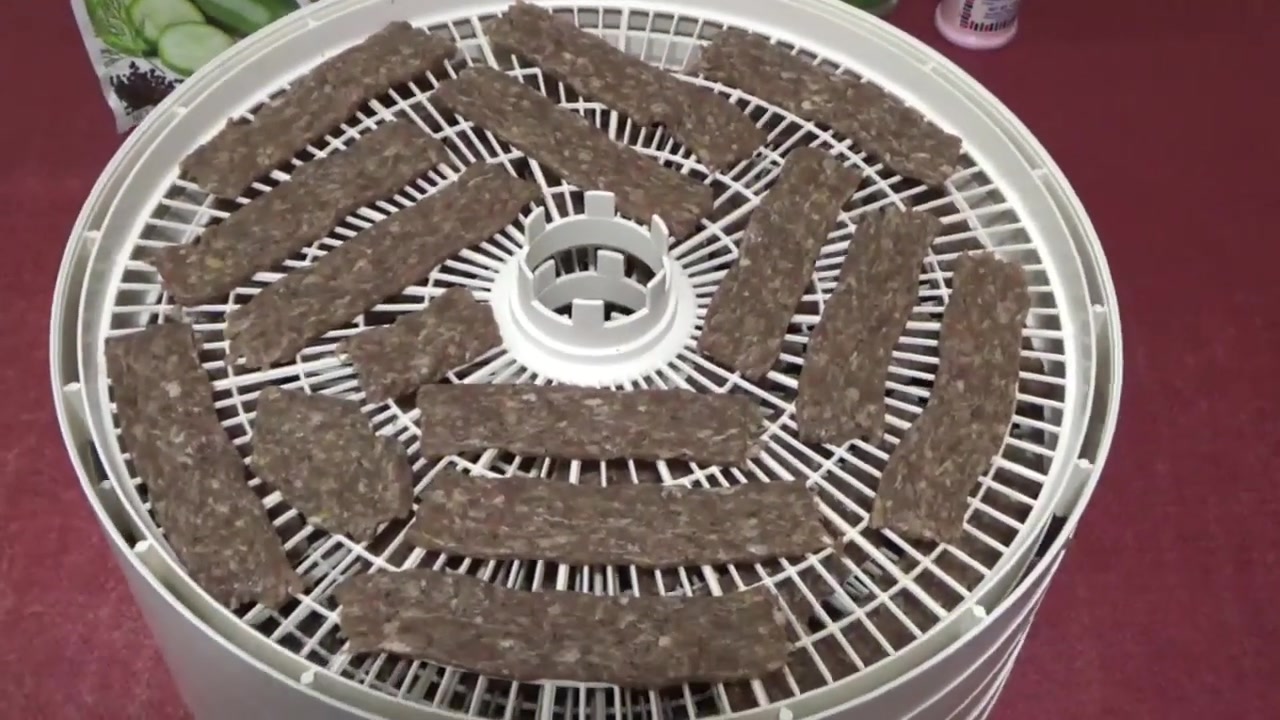
Preheat the oven to 325°F. Heat the shaped strips on oven-safe racks until a thin-tip thermometer inserted sideways into several of the thickest pieces reads 160°F. Check the meat itself, not the oven air. Transfer with clean utensils to clean dehydrator trays and dry at 145–155°F, checking periodically until dry through. Drying time varies with thickness and equipment.
Step 6: Blot, cool and refrigerate
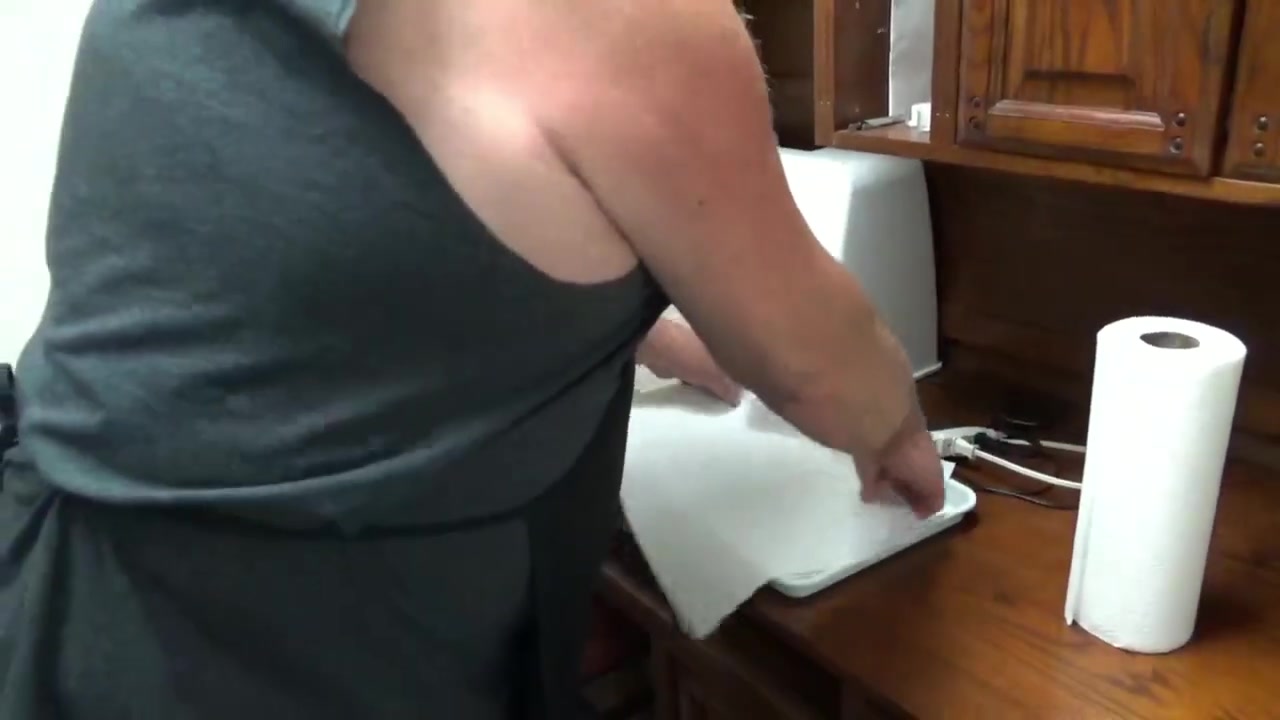
Blot any visible surface grease with clean paper towels. Cool a sample before checking that it is dry through with no soft, wet center; return moist pieces to the dryer. Let the whole batch cool completely before packing. Refrigerate the finished jerky and freeze extra portions. Texture checks do not establish a safe room-temperature shelf life.
Why this flavor works
Dry pickle seasoning contributes salt and a tart pickle note without a liquid brine. Garlic, black pepper and dried dill make that flavor recognizable after drying. Choose a seasoning you like rather than adding extra salt automatically.
Serving and storage
Serve a chilled portion with unsalted crackers or cucumber slices. Keep the remaining jerky refrigerated, and pack small portions so the main container spends less time out of the refrigerator.
Keep the finished jerky refrigerated. Pack only fully cooled strips, keep hands and containers clean, and freeze portions you will not eat promptly. Moisture, thickness, and handling affect keeping quality; this home method does not establish commercial shelf stability.
A ready-to-eat option between batches
For a convenient jerky snack when you are not making a batch, explore BULK Texas Style Original Beef Jerky. Its seasoning and production process differ from this homemade adaptation.
Browse every published BULK jerky recipe.
Sources and further reading
- How to Make Dill Pickle Jerky — Howie The Butcher
- USDA: how to make meat or poultry jerky at home
- National Center for Home Food Preservation: jerky
Original BULK adaptation after reviewing the source video’s automatic captions and ingredient discussion. Source footage and creator credit belong to Howie The Butcher. Photographs are timestamped source-video stills. Use the full written method for details.
Save the complete recipe guide
Keep the ingredient list and all six steps together. Save the image for your next batch.
Download the recipe infographic